Understanding compensation packages means looking beyond salary. Benefits, bonuses, and perks can greatly impact your total compensation.
When you think about what makes a job appealing, salary is often at the forefront. And it's completely understandable, money is essential. But here's the thing. Compensation packages include much more than just your base pay. If you're serious about maximizing your job offer, you need to get familiar with the full package.
What are the Key Components of a Compensation Package?
A solid compensation package consists of salary, bonuses, healthcare, retirement plans, and more. It shapes your financial future.
When assessing a job offer, it's crucial to look at all the elements that make up your compensation package. Let’s break them down:
Base Salary
- The guaranteed amount of money you earn annually.
- According to the Bureau of Labor Statistics, the average salary in the U.S. is around $54,000 for full-time roles.
Bonuses
- These can come in various forms, including performance bonuses, sign-on bonuses, or annual incentives.
- Many businesses offer bonuses to encourage productivity; for instance, about 75% of companies report doing so, according to a recent survey by SHRM.
Benefits
- Benefits often include:
- Health insurance
- Dental and vision coverage
- Paid time off
- Flexibility arrangements (like telecommuting)
- A survey by Glassdoor found that 57% of candidates consider benefits and perks to be one of their top negotiating factors.
Retirement Plans
- Many employers offer pension plans or 401(k) options, sometimes with matching contributions.
- Retirement planning can lead to substantial savings over time, making it a key component of total compensation.
Why is it Important to Understand Your Total Compensation?
Knowing your total compensation helps you make more informed career decisions and enhances your negotiation strategies.
Understanding the different parts of a compensation package goes beyond just accepting a job offer. Here’s why:
Making Informed Choices
- If you assess your package as a whole, you’ll better understand its long-term value.
- For example, might a lower salary come with unparalleled benefits that can outweigh a higher base pay?
Negotiating Effectively
- When you know what’s included in your compensation, you can negotiate like a pro. If you're unsure what's typical, you can refer to resources like the Indeed Career Guide to help with your salary negotiation.
- Look for industry data or ask current employees about their packages. This knowledge can empower you when navigating how to negotiate salary during the job offer negotiation process.
Avoiding Regrets
- Nobody wants to realize later that they undercut themselves. By understanding the full spectrum of your compensation, you can feel more confident in what you're accepting.
How Can You Negotiate Your Salary and Enhance Your Compensation Package?
Successful negotiation is about communication and understanding your worth. Prepare, be straightforward, and don’t settle too easily.
Effective salary negotiation might feel daunting, but it doesn’t have to be. Here are some strategies:
Do Your Research
- Investigate similar roles in your industry. What are candidates earning?
- Use tools like our Resume Builder to analyze industry-specific salaries.
- Websites like Glassdoor or Payscale provide good insights into salary ranges based on role and location.
Practice Your Pitch
- Rehearse how you’ll present your case.
- Make a list of achievements, relevant skills, and benchmarks to discuss your value effectively.
Be Open and Honest
- Don't shy away from discussing your expectations. This can lead to a dialogue about the overall package.
- Consider phrases like, “I was hoping for…” to express your needs while remaining flexible about components beyond salary.
| Salary Component | Average Amount | Common Benefits |
|---|---|---|
| Base Salary | $54,000 | Health Insurance, Paid Time Off |
| Average Bonus | $5,000 | 401(k) Matching |
| Average PTO | 15 Days | Flexible Schedule |
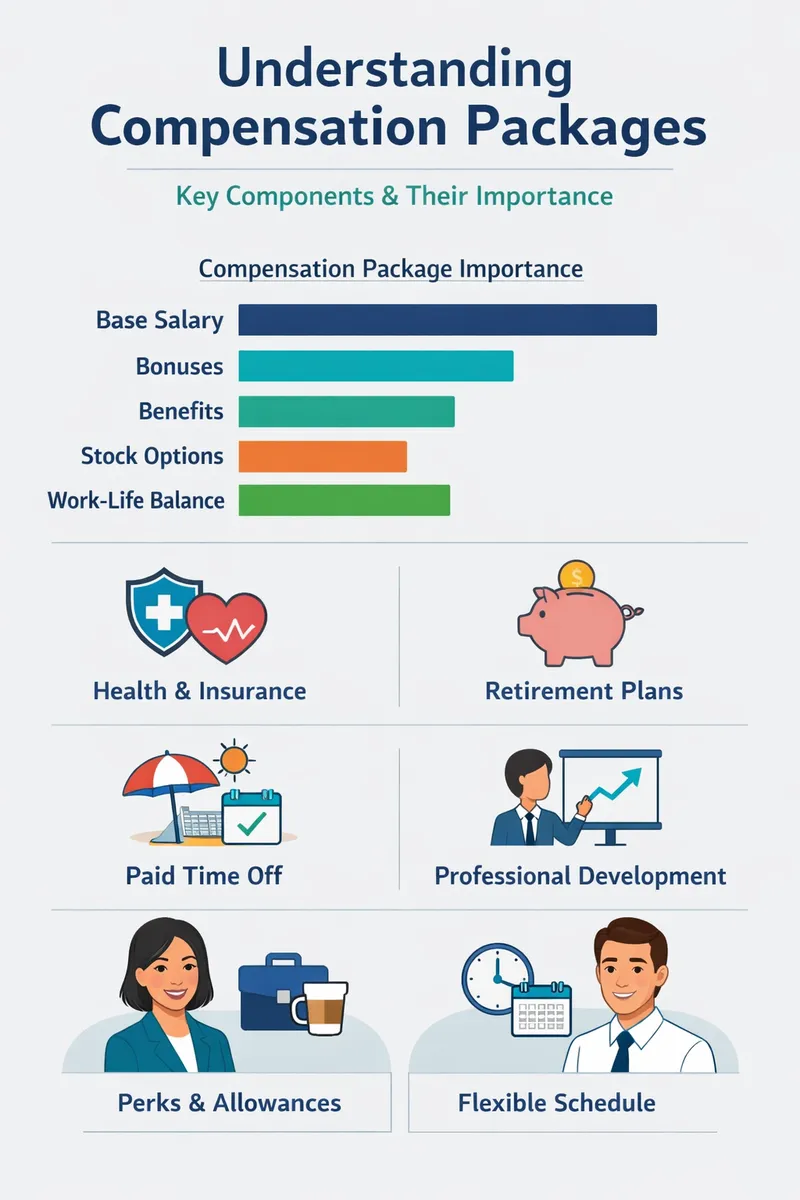
Chart showing various components of compensation packages and their importance.
Understanding the complexity of compensation packages is essential. At times, even simply asking for a raise can open doors to other benefits you might not have considered. By having the necessary knowledge, you can enter negotiations with confidence.
Key Takeaways
- Salary is just one part of compensation packages.
- Look at bonuses, benefits, and retirement plans too.
- Knowledge is power, do your research and practice negotiating.
- Don't forget about non-monetary components; they matter.
In today's job market, it's vital to understand the full range of your potential compensation. So, before you finalize any offers, consider checking out tools like our Resume Checker to ensure you're putting your best foot forward. It might just give you an edge in negotiation. Remember, understanding how to negotiate salary effectively can truly set you apart.