Knowing your worth in salary negotiation is essential for career growth. Salary research can empower you to secure favorable terms.
Salary negotiation is more than just asking for a higher paycheck; it’s a psychological endeavor. Many professionals struggle with feeling uncomfortable or unprepared when discussing compensation. But here's the thing: understanding your worth isn’t just a skill. It’s essential.
Why Is Salary Research Important?
Salary research equips you with the necessary information to argue your value confidently during negotiations. Knowing market rates is vital.
Understanding salary trends is your foundation. It builds confidence and gives you a benchmark.
What should you research?
1.Market Rates: Identify average salaries for your role.
- Use resources like Bureau of Labor Statistics to find industry data.
- Explore salary tools on platforms like Indeed Career Guide for personalized insights.
2.Your Skills: Align your skills and experiences with market demands. Ensure they match up to justify your ask.
- Consider certifications, years of experience, and unique skills that differentiate you from other candidates.
3.Company Data: Research company-specific pay structures. A company within a bigger network may pay differently.
- Check Glassdoor or LinkedIn reviews for salary insights.
How Do You Convey Your Value?
Communicating your value effectively is crucial to a successful salary negotiation. Speak with confidence and clarity.
You can maximize your approach and deliver compelling reasons to support your salary expectation.
What points should you cover?
- Quantifiable Achievements: Show your contributions in numbers.
- For instance, “I increased sales by 15%” carries more weight than “I helped sales.”
- Market Comparisons: Mention your research on salary ranges to contextualize your request.
- Future Contributions: Articulate how your role will evolve and add value.
- How do your skills propel the company forward?
Tools for Communication
- Role-playing: Practice with a friend. Simulate the negotiation.
- Script: Write a basic outline of key points you want to cover during negotiations.
When Should You Ask for a Raise?
Timing can be just as crucial as the content of your negotiation. Understanding when to ask for an increase is vital for success.
You don’t want to create unnecessary tension or place demands at inconvenient times.
Ideal Moments to Approach
- Performance Reviews: Many organizations have formal reviews. It’s a natural time to bring it up.
- Project Success: After you’ve led a successful project, riding the positive wave can strengthen your case.
- Before Job Offer: When you’re discussing job offers, never hesitate to negotiate for what you deserve.
Salary Negotiation Statistics
| Salary Research Benefits | Professionally Trained Candidates | Untrained Candidates |
|---|---|---|
| 10-20% Higher Offers | 75% Negotiated Successfully | 33% Negotiated Successfully |
Infographic Placeholder
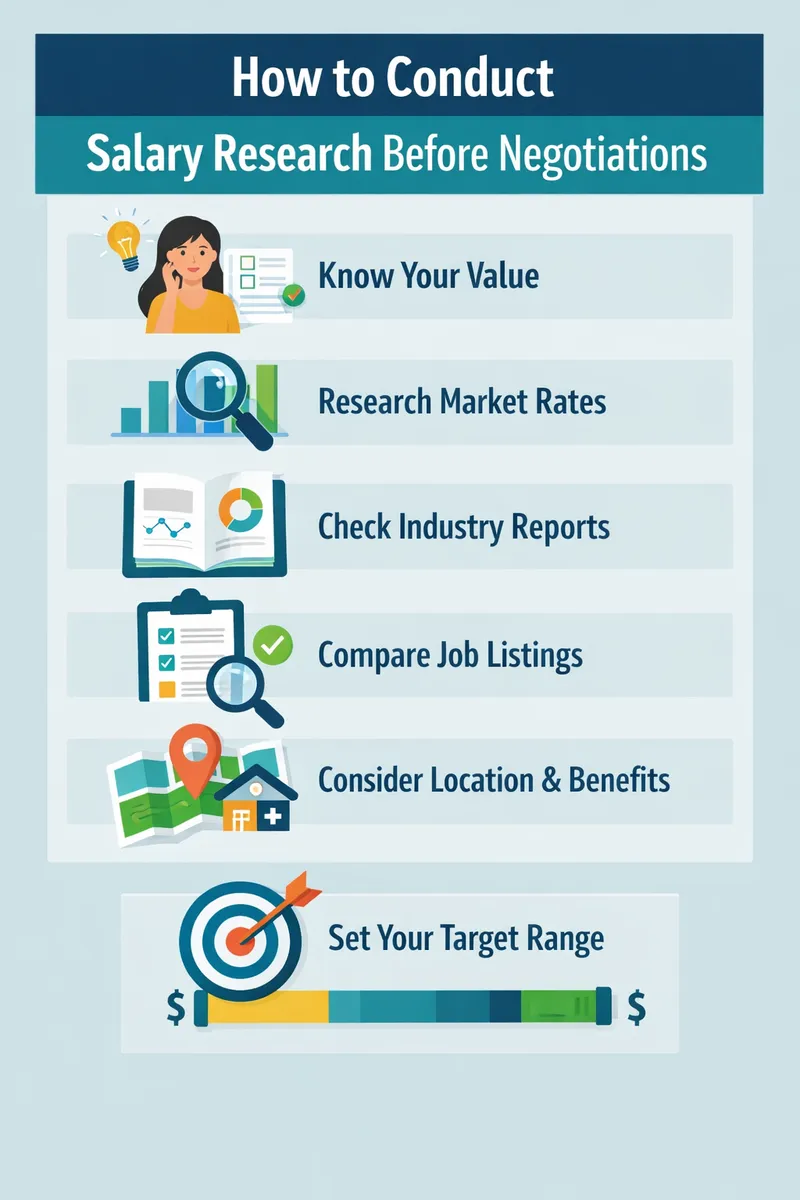
Visual showing a step-by-step guide on how to conduct effective salary research before negotiations
Being informed translates into power. Knowledge can make you feel confident, enabling a more constructive discussion about your salary. And don’t understate your unique contributions.
Key Takeaways
- Salary research is essential for effective negotiation.
- Clearly articulate your skills and accomplishments.
- Timing plays a critical role in salary requests.
- Practice your approach for better delivery.
In conclusion, navigating the world of salary negotiation can feel daunting. But with diligent salary research and a solid understanding of your worth, you can walk into that conversation ready to make your case effectively. So before your next chat about compensation, check our tools like the Resume Builder and LinkedIn Optimizer to polish your approach. Remember, you deserve fair compensation for your skills and contributions.