Understanding the psychology behind salary negotiations can significantly boost your salary expectations.
Negotiating your salary? It can feel daunting, right? Many people dread it, fearing they’ll either ask for too much or get too little. Here’s the thing: negotiating is often about more than just numbers. It’s about the psychology behind how you present your salary expectations and the strategies you employ.
What Psychological Factors Influence Salary Negotiation?
Psychological factors, such as confidence and framing, play a crucial role in successful salary negotiations.
Understanding Confidence in Negotiation
Confidence can heavily influence the outcome of your negotiation. When you exude confidence, you're more likely to command respect in discussions about your salary expectations. Here’s how to build that confidence:
- Prepare Thoroughly: Research average salaries in your field using resources like the Bureau of Labor Statistics. Knowing the numbers gives you an edge.
- Practice Makes Perfect: Role-play with a friend to simulate the conversation. The more you practice, the more confident you'll become.
The Role of Framing
The way you frame your requests can significantly affect how they are perceived. Here are some framing techniques:
- Prospective Approach: Instead of saying, “I need to make $X for my living expenses,” try, “Based on my experience and the value I bring, I believe $X is a fair compensation.”
- Focus on Mutual Benefit: Emphasize how your skills and contributions will benefit your employer, making it easier for them to agree to your salary expectations.
How Important is Salary Research in Negotiations?
Conducting thorough salary research helps you present informed and realistic salary expectations to potential employers.
Gathering Reliable Data
Before approaching any salary discussion, do your homework. Research industry standards and benchmarks.
- Use Tools: Websites like Glassdoor, PayScale, and Indeed offer insights into average salaries for specific roles.
- Consult Networks: Discuss with peers in your field for real-world insights. Sometimes, personal anecdotes can provide context that websites can't.
Analyzing the Market
Know the trends in your industry. Is there a shortage of skilled workers? Are salaries increasing? This information could push your expectations higher. Look for signs such as:
- Industry reports
- Job postings stating salary ranges
- Economic factors that affect hiring trends (think supply and demand)
What Strategies Can I Use During Negotiation?
Strategic negotiation tactics can lead to more favorable outcomes when discussing salary expectations.
Anchoring Technique
One effective strategy is anchoring. This means presenting a high initial offer to set a frame of reference. For instance, if you expect $70,000 but think you might get $60,000, state $70,000 first. Here’s why it works:
- Sets the Stage: Creates a mental benchmark for the negotiation, influencing where discussions start.
- Encourages Compromise: The employer may see that initial number and offer a middle ground, which can still meet your needs.
Timing is Everything
When you bring up salary can be as important as what you say. Consider these points:
- Post-Job Offer: Once you’ve secured an offer, you have the strongest position to negotiate.
- After Highlighting Contributions: Ensure you've outlined your accomplishments and the value you'll bring, then segue into salary expectations.
| Salary Expectation | Industry Average | Best Case | Worst Case |
|---|---|---|---|
| $60,000 | $55,000 | $70,000 | $50,000 |
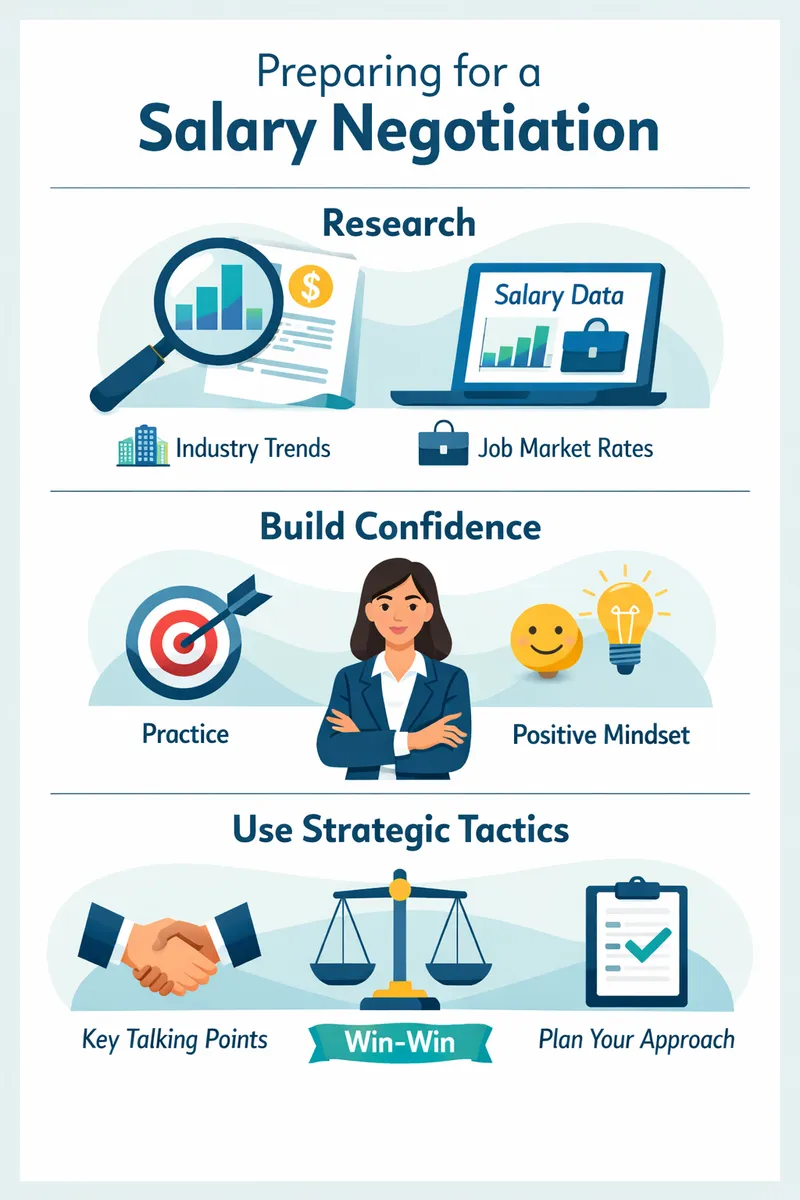
A visual representing the steps in preparing for a salary negotiation including research, confidence building, and strategic tactics
Key Takeaways
- Understand the psychological factors like confidence and framing that influence negotiations.
- Conduct thorough salary research using reliable sources to set realistic expectations.
- Utilize negotiation strategies such as anchoring and timing to enhance outcomes.
In summary, salary negotiations don’t have to be scary. With the right preparation and strategies, you can present your expectations confidently and effectively. Remember, it’s not just about what you’re asking for; it’s about the value you bring to the table.
Looking for more assistance? Check out our Resume Builder and LinkedIn Optimizer to strengthen your profile and job application. With the right tools, you can approach salary negotiations with confidence.
While you're at it, don’t forget to check our tools, where you can gather invaluable resources to support your job search.