Using industry-specific keywords in your ATS resume is crucial for passing applicant tracking systems and getting noticed by hiring managers.
In today’s competitive job market, optimizing your resume for ATS is essential. The applicant tracking system (ATS) is your digital gatekeeper and, without the right keywords, your resume might never reach human eyes. But what exactly are these industry-specific keywords, and why do they matter?
Why Are Industry-Specific Keywords Essential for Your ATS Resume?
Industry-specific keywords help your ATS resume stand out, ensuring that your qualifications match the job's requirements while increasing your chance to beat the ATS.
When you apply for a job, you're mostly sending your resume into the void. The ATS scans, analyzes, and ranks documents based on keywords. Here’s why using the right industry-specific terms is non-negotiable:
Understanding ATS Functionality
- Keyword Parsing: ATS breaks down your resume into components. Keywords act like coding for the ATS, signaling relevant skills or experiences.
- Scoring Systems: Many ATS rank candidates on a scale, determining which resumes to showcase to recruiters. An ATS-friendly resume would ideally contain 10-20 relevant keywords.
Common Mistakes Job Seekers Make
- Generic Phrasing: Using broad and vague terms won’t cut it. Instead, aim for specific language that reflects the role you’re targeting.
- Ignoring Job Descriptions: Not customizing your resume for each application is one of the biggest mistakes candidates make. Pay attention to requirement lists.
How Do You Identify Industry-Specific Keywords?
To pinpoint the right keywords for your ATS resume, study job descriptions carefully and align your terminology to what hiring managers want to see.
Finding the right industry-specific keywords isn’t as complex as it sounds. Here are some effective strategies:
Analyzing Job Descriptions
- Look for Repeated Terms: Job postings often highlight critical skills and qualifications. If they mention a tool or technology multiple times, it’s important.
- Professional Jargon: Each industry has its own language. Familiarize yourself with the buzzwords common to your field. This shows you know the trade well.
Competitive Research
- Resume Examples: Browse multiple resume examples to see how industry veterans phrase their experiences.
- Informational Interviews: Talk to people currently working in your target job. Ask them what skills and keywords got them noticed in the hiring process.
How Can You Optimize Your Resume for ATS?
An ATS-friendly resume isn't just about the right keywords; it’s about formatting too. Use clear headings and bullet points to make your resume easy for the ATS to read.
Getting your keywords right is the first step, but how you structure your ATS resume is equally important. Here’s how to create a document that captures attention:
Resume Formatting Tips
- Simple Formatting: Avoid overly complex designs that ATS will misinterpret. Use standard fonts and basic layouts.
- Keyword Density: Aim to include relevant keywords naturally throughout your resume. An overstuffed resume raises red flags for both ATS and human readers.
Comparison of ATS Optimized vs. Non-Optimized Resume
| ATS Optimized Resume | Non-Optimized Resume | Key Differences |
|---|---|---|
| Uses specific industry keywords | Uses generic phrases | ATS can easily rank optimized resumes |
| Clear and structured format | Complex designs | Simplified formats improve readability |
| Aligns with job descriptions | Doesn't customize for roles | Keywords must match role needs |
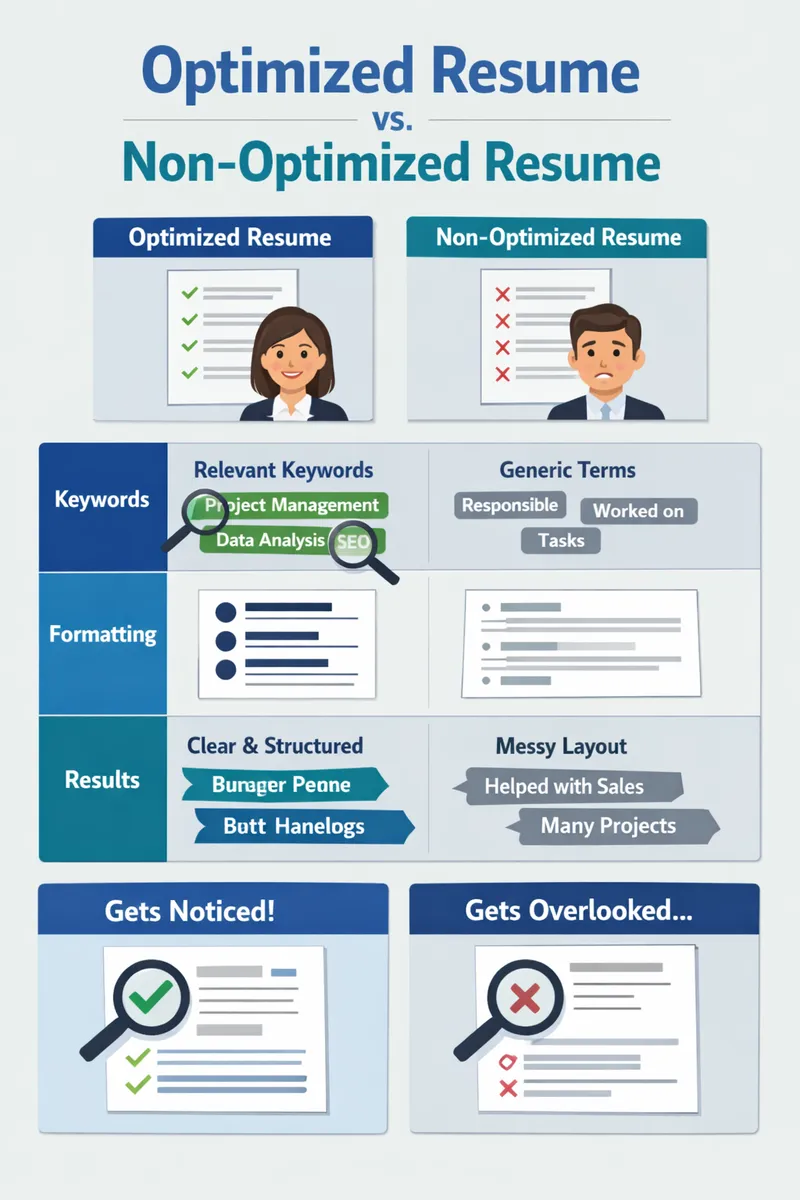
A visual illustrating the difference in keyword usage and formatting between optimized and non-optimized resumes
For job seekers, understanding and applying these principles is how you can increase your visibility. According to the Bureau of Labor Statistics, over 75% of large companies use some form of ATS. So, it pays to be educated.
In addition to researching keywords, check out an Indeed Career Guide for deeper insights into crafting your resume.
Key Takeaways
- Industry-specific keywords are crucial for ATS resume optimization.
- Analyze job descriptions and use competitive research.
- Structure your resume with clear formatting and natural keyword density.
As you optimize your resume, don’t forget to utilize our Resume Builder for crafting content that captures attention. Remember, an ATS resume isn’t just a formality; it’s your ticket into the interview room. Stick with it, and you will see results with persistence and strategic formatting.