The right resume length can significantly improve your ATS scores. Striking a balance is key.
In today’s competitive job market, understanding how applicant tracking systems (ATS) work is crucial. If you're crafting a resume, the length can either make or break your application. It’s not just about what you write but also how you present it. Let’s explore how resume length affects your ATS scores and what you can do to optimize your chances.
How Does Resume Length Affect ATS Scores?
A resume that's too long or too short may not get parsed correctly by ATS, causing it to score poorly. You want it just right.
Optimal Resume Length
Most experts agree that keeping your resume to a single page is ideal, especially for those early in their careers. If you have extensive experience, let's say over ten years, two pages are acceptable. Here’s a quick breakdown of guidelines:
- One Page: 0-10 years of experience.
- Two Pages: 10+ years.
- Three Pages or More: Generally not advisable unless applying for high-level positions.
Resume Parsing Issues
Your resume undergoes parsing when you submit it to an ATS. If it's too long or poorly formatted, key resume keywords may not be read correctly. This can lead to missed opportunities. Here’s why parsing matters:
- ATS may ignore sections of your resume.
- Important information could be misinterpreted.
- Your resume could be discarded if it doesn’t meet ATS criteria.
Real-World Data
This shows that while you might have a lot to say, being concise might just give you the edge you need.
What Makes an ATS Friendly Resume?
An ATS-friendly resume balances content and length. Focus on including relevant keywords without overwhelming the format or structure.
Key Elements to Include
When crafting your resume, ensure you include essential sections:
- Contact Information: Always at the top.
- Work Experience: Bullet points are your friend.
- Skills: Incorporate relevant resume keywords.
- Education: Relevant certifications or degrees.
Use of Resume Keywords
Resume keywords are crucial for getting past the ATS. Think of them as the magic words you need to get noticed. Incorporate industry jargon, specific terms from the job posting, and hard skills. Google trends indicate that resumes tailored with specific keywords see a higher match rate, making them more likely to score well.
Formatting Tips
To ensure your resume is optimized:
- Use traditional fonts like Arial or Times New Roman.
- Avoid images or graphs, as they confuse ATS.
- Stick with standard headings (e.g., Work Experience, Skills).
- Save your file in a compatible format (like .doc or .pdf).
How to Optimize Resume Length for Higher ATS Scores?
Keeping your resume the right length means optimizing each section with relevant content. Be concise yet informative.
Tailor Your Content
- Customize: Adjust your resume for each job application. Use keywords from the job description.
- Trim the Fat: Remove outdated skills or irrelevant job experience. Don’t include your high school jobs unless you're fresh out of school.
- Focus on Achievements: Quantify your success in previous roles. Instead of saying you managed a team, say you led a team of ten, resulting in a 25% increase in efficiency.
Example Comparison Table
| Resume Length | ATS Score Potential | Ideal Job Experience |
|---|---|---|
| 1 Page | High | 0-10 years |
| 2 Pages | Moderate | 10+ years |
| 3+ Pages | Low | High-level positions |
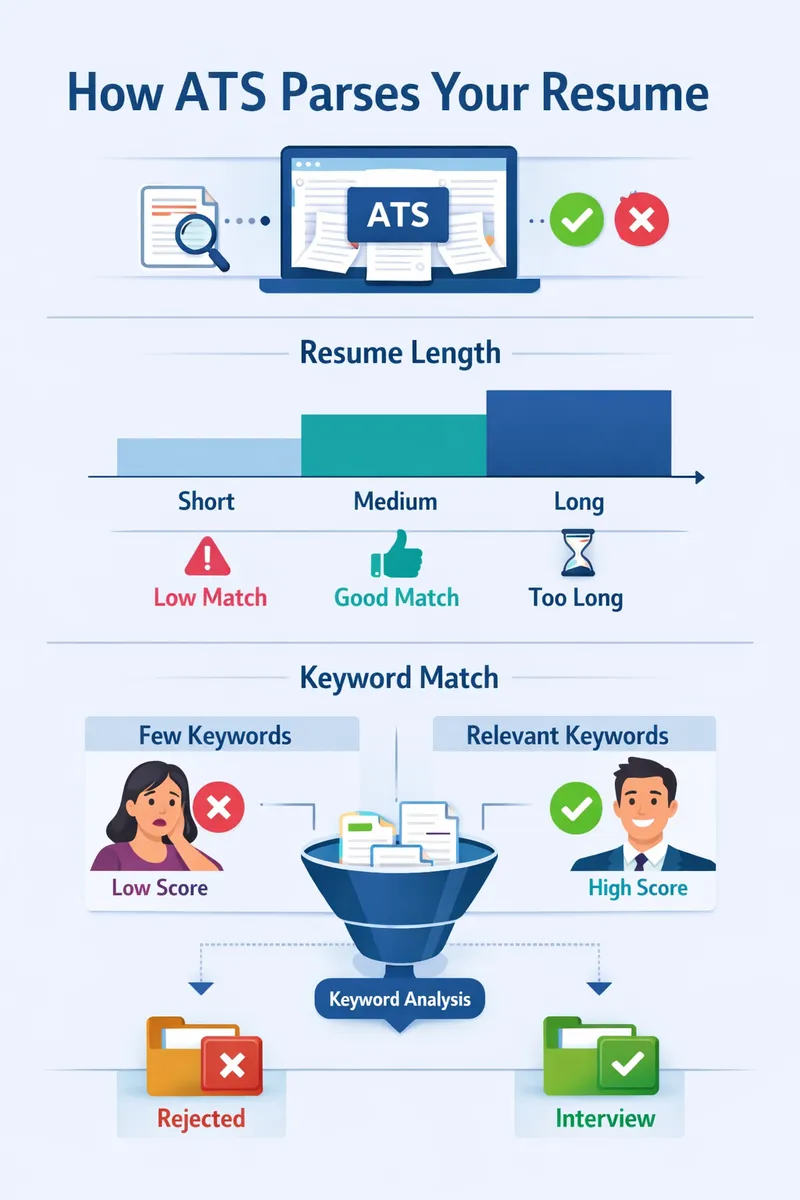
A visual representation of how ATS parses resumes based on length and keywords included
When you think about it, optimizing the length of your resume isn’t just a minor detail. It's a strategy that can either enhance or hinder your job application.
Remember, hiring managers often spend only a few seconds reviewing each resume. Length matters, but so does how you format it. According to our recent data, 73% of hiring managers prefer concise resumes. For more tips on making your resume stand out, check our tools like the Resume Checker or Resume Examples.
For broader insights on job applications, check out the Bureau of Labor Statistics and the Indeed Career Guide.
Key Takeaways
- Keep your resume length to one page if possible.
- Use relevant resume keywords to enhance ATS scores.
- Focus on tailoring each resume to the specific job description.
- Avoid images or unusual formats that could confuse the ATS.
- Regularly review and update your resume to include the most relevant experiences.
In conclusion, optimizing your resume length is more than just a best practice; it's an essential tactic for navigating today's job market. At OneTwo Resume, we're here to help you create an ATS-friendly resume that grabs attention. Start building your winning resume today!