Taking a new career at 40 can be daunting, but with the right mindset and tools, you can turn anxiety into confidence.
Entering a new career path may seem overwhelming, especially when you're 40 or older. But look, this chapter in your life can be exciting and rewarding. You might feel anxiety about starting fresh, but you're not alone. In fact, many people have made successful transitions later in their careers, and you can too. Here are some key insights and practical tips to help you navigate this change smoothly.
What Are the Causes of Career Change Anxiety?
Anxiety stemming from a career change is often linked to fear of the unknown and self-doubt. Recognizing these triggers is a crucial first step.
Fear of the Unknown
Starting a new career means stepping into unfamiliar territory. That uncertainty can be stressful. You may wonder:
- Will I be good enough?
- Am I making a mistake?
- What if I can't adapt?
Self-Doubt and Imposter Syndrome
Many people struggle with feelings of inadequacy during a transition. You're not alone. Studies show that about 60% of professionals report experiencing imposter syndrome when moving to a new career. Remind yourself of your worth and the skills you bring.
How Can Transferable Skills Ease Your Transition?
Your skills aren't just tied to your last job. Identifying transferable skills can boost your confidence and open new doors in your new career at 40.
Identifying Transferable Skills
Take a moment to list your skills. What are you great at? What have you succeeded in before? Skills such as communication, project management, and leadership often transfer well between industries. Assess how these can apply in your new role.
Practical Steps to Highlight Your Skills
- Tailor Your Resume: Use our Resume Builder to emphasize your transferable skills.
- Network Effectively: Reach out to former colleagues for insights into areas of growth.
- Document Your Achievements: Provide concrete examples of your past success.
What Strategies Can Help Reduce Anxiety During Your Job Search?
Implementing effective strategies can help you tackle anxiety head-on, making the journey to your new career at 40 smoother.
Create a Structured Plan
Start by mapping out the steps you need to take. Perhaps you need to reskill or network. Whatever it is, break it down into manageable tasks. For example:
1.Update your LinkedIn profile with a LinkedIn Optimizer.
2.Identify 5 companies you want to work for.
3.Tailor your resume for each application using our Resume Checker.
Validate Your Feelings
It's normal to feel anxious during this period. Take a step back and remind yourself that many have walked this path before. Acknowledge your emotions but don't let them control your decisions.
Seek Support
Talk to friends, family, or even professionals who understand career transitions. Sometimes, just sharing your thoughts helps alleviate anxiety. Join online forums or local meetup groups for people in similar situations. Here’s a point: don’t underestimate the power of community support.
Career Change Statistics to Consider
Look at these eye-opening statistics:
- According to OneTwo Resume, over 50% of professionals consider switching careers after 40 but only 20% take action.
| Aspect | Statistic | Additional Insights |
|---|---|---|
| Professionals Changing | 50% after 40 | Many see it as a chance for growth |
| Hiring Managers Value | 73% appreciate diversity | Non-linear careers often bring innovation |
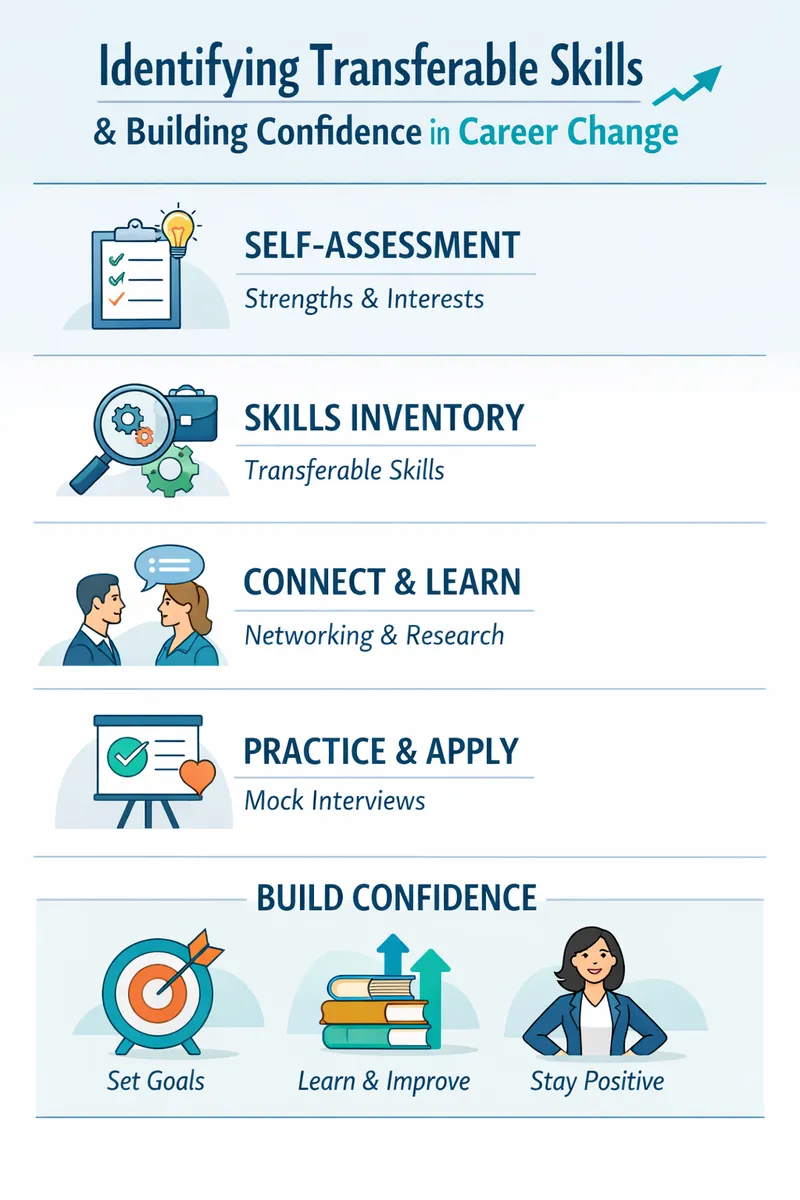
An overview of steps to identify transferable skills and build confidence during career change
Transitioning to a new career may be intimidating, yet it's commonly done and can lead to fulfilling outcomes. As you navigate this journey, remember that you're not starting from scratch; you're starting from experience. For more tips on optimizing your transition, check out the Indeed Career Guide.
Key Takeaways
- Recognize the sources of your career change anxiety.
- Identify transferable skills to ease the transition.
- Create a structured plan to keep anxiety in check.
- Seek support and share your feelings with others.
In conclusion, changing your career at 40 can be an exhilarating opportunity for growth. Take it one step at a time, and remember you have a wealth of experience to draw from. With the right tools and support, you can embrace this new venture with confidence. For more assistance in your journey, don’t hesitate to check out OneTwo Resume.