The key to a successful career pivot lies in recognizing your transferable skills and embracing a mindset of growth.
What Should You Know Before Making a Career Pivot?
Understanding your motivations and the new skills needed is crucial for any career pivot. It sets the foundation for your transition.
Know Your Why
Before diving in, reflect on why you're considering this change. Is it job satisfaction, flexibility, or better pay? Knowing your motivation provides direction.
- Identify dissatisfaction: What specific aspects of your current job lead to your desire for change?
- Define your goals: What do you want your new career to offer?
Evaluate Your Transferable Skills
Let's face it, you have skills. Even if you're shifting fields, you likely possess valuable transferable skills that you can carry over. Skills such as:
- Communication
- Problem-solving
- Project management
And here's a bit of encouragement: OneTwo Resume analyzed 50,000+ resumes and discovered that over 60% of career changers successfully highlight transferable skills, making them attractive to potential employers.
How Can You Build Confidence in Your New Career Path?
Building confidence is about preparation and positive reinforcement. Embrace the process and seek feedback to grow.
Build a Learning Plan
Creating a structured learning plan can make the transition smoother. Identify the skills needed for your new role and actively seek resources:
- Online courses (check platforms like Coursera or Udemy)
- Networking events in your new field
- Mentorship opportunities for practical insights
Practice Self-Compassion
Here's the thing, transitioning to a new career can be daunting. It’s normal to feel anxious or uncertain. Acknowledge these feelings and be patient with yourself. Remind yourself that:
- Everyone faces challenges in new environments.
- You bring unique perspectives from your previous roles that can add value.
What Resources Can Provide Help During Your Transition?
Many resources are available to help you smooth your career pivot journey and boost your confidence.
Use the Right Tools
Utilizing online resources can drastically improve your chances of landing your dream job. These tools can assist you:
- LinkedIn Optimizer: Enhance your profile and make connections in your new field.
- Resume Builder: Tailor your resume to highlight transferable skills effectively.
- Resume Checker: Make sure your resume passes ATS checks and stands out.
Network with Purpose
Networking is incredibly valuable during a career change. You can find mentors, industry professionals, and even new friends.
- Attend local meetups or virtual webinars.
- Engage in online communities related to your new career.
- Don’t hesitate to reach out for informational interviews.
| Skill Type | Importance Level | Action Plan |
|---|---|---|
| Technical Skills | High | Enroll in relevant courses |
| Soft Skills | Medium | Practice in real scenarios |
| Networking Skills | High | Attend 1 event per month |
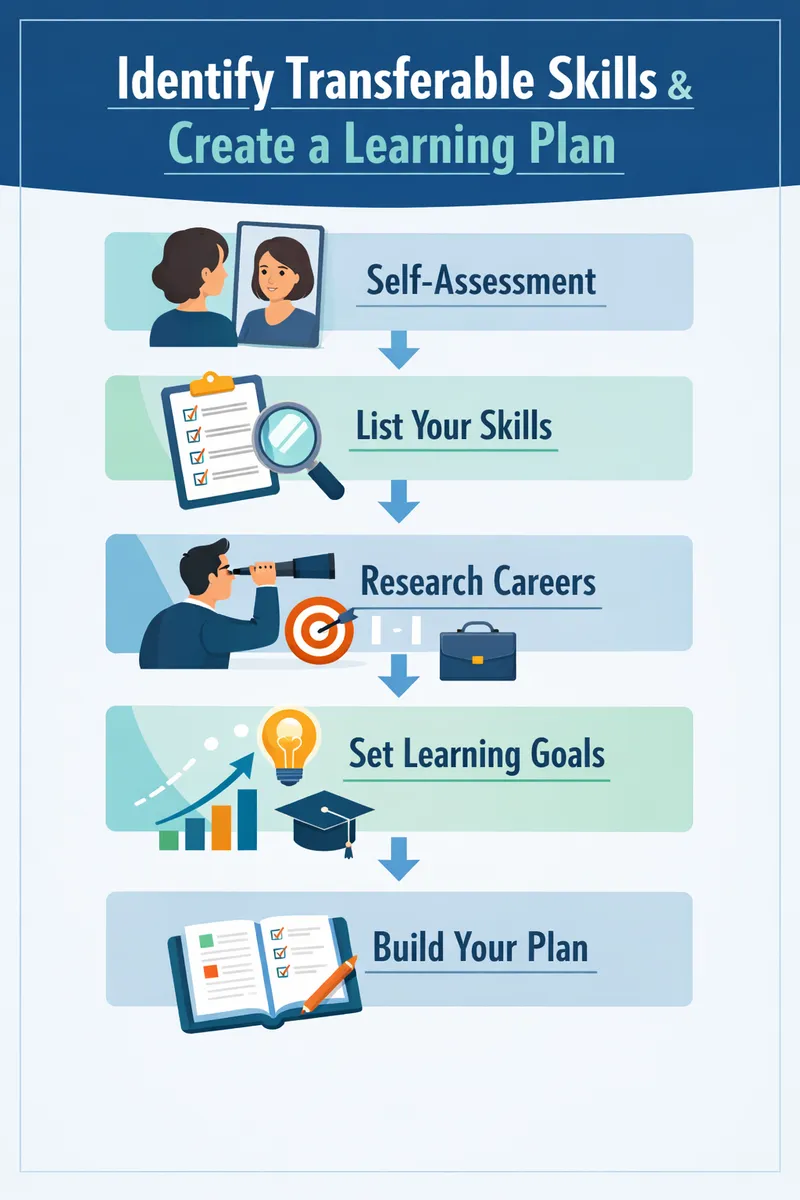
Visual representation of the steps to identify transferable skills and create a learning plan.
And remember, 73% of hiring managers surveyed reported valuing candidates who can demonstrate adaptable skills over specific experience. Your past has value, even if it's in a different context.
Key Takeaways
- Define your motivations for a career pivot.
- Identify and highlight your transferable skills.
- Build a structured learning plan and network strategically.
- Use online resources like our Resume Examples and Resume Builder to boost your confidence.
Conclusion
Truth is, navigating a career change is not just about finding a new job. It's about building confidence in your abilities and creating a path that fulfills you. By recognizing your skills and actively engaging in the transition process, you're setting yourself up for success. For more helpful resources, visit OneTwo Resume today.