Preparing for salary negotiations can feel intimidating, especially in competitive industries. But don’t worry, with the right strategies, you can confidently approach the conversation and secure a fair compensation package.
Knowing your worth and having a solid game plan can be the difference between landing that dream job or settling for less.
What Should You Research Before Salary Negotiations?
Researching salary benchmarks is crucial. You need to know the market rate for your skills and experience level. Without this knowledge, you risk undervaluing yourself.
Understand Market Trends
- Use reliable sources: Websites like the Bureau of Labor Statistics and industry reports provide valuable insights on average salaries in your field.
- Network: Talk to colleagues or mentors in your industry. They can share their own experiences and insights about what's competitive.
Know Your Value
- Assess your skills: Make a list of what makes you unique. What do you bring to the table that others might not?
- Quantify achievements: Use specific numbers. Did you increase sales by 20%? That’s powerful information during negotiations.
Prepare Your Salary Expectations
- Define your range: Based on your research, come up with a salary range you're comfortable with. A good rule is to aim for 10% above your ideal number.
- Practice articulating it: Saying it out loud helps. Try it with friends or in front of a mirror. Trust me, this can ease the pressure once you’re at the negotiating table.
How Should You Present Your Case During Negotiations?
When it’s time for the conversation, clarity and confidence are essential. Know how to communicate your value effectively.
Start with the Employer's Perspective
- Understand their need: Use language that shows you know what they’re looking for. For example, using phrases like “I can help achieve...” frames your skills in terms of their business needs.
- Be respectful: Remember, you’re working together towards a solution. A respectful tone can go a long way in establishing rapport.
Use Clear and Concise Language
- Avoid jargon: Keep it simple. You want them to understand what you’re saying without any confusion.
- Practice makes perfect: Prepare a few phrases that sum up your achievements and your salary expectations. Rehearse them until it feels natural.
Anticipate Questions and Objections
- Be ready for pushback: Employers might challenge your numbers. Be prepared to justify your expectations with data and personal achievements.
- Stay flexible: If the salary isn’t negotiable, think about other benefits you can negotiate, like remote work, extra vacation days, or professional development opportunities.
What Are Common Mistakes to Avoid?
Avoiding typical missteps is just as important as knowing what to do. Being aware can keep your negotiation on track.
Underestimating the Value of Networking
- Don’t go solo: Utilize your network for insights and support. They might even have valuable recommendations or referrals.
- Follow up: After conversations, always keep in touch. You never know when a connection might help in your negotiations.
Accepting Initial Offers Without Question
- Don’t just say yes: Employers often expect some back and forth. Use this opportunity to negotiate. If they say, “This is our best offer,” ask if they can re-evaluate.
- Take your time: If needed, ask for a day or two to think about the offer. It’s okay to take a breather to make an informed decision.
| Component | Salaries | Benefits | Other Perks |
|---|---|---|---|
| Technology | $80K | Flexible hours | Remote options |
| Marketing | $70K | Healthcare | Paid training |
| Finance | $90K | Retirement plan | Bonus potential |
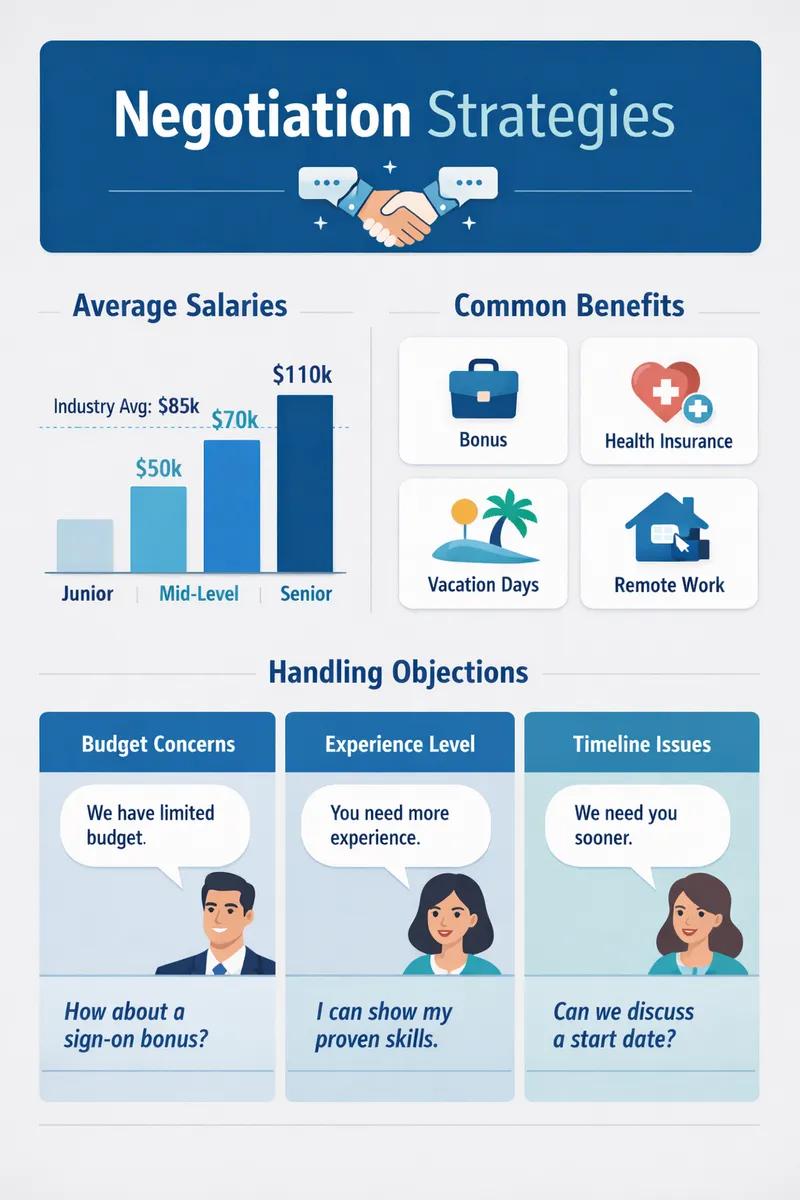
Visual overview of negotiation strategies highlighting data points like average salaries, common benefits offered, and responses to typical objections.
To really understand salary negotiations, there are many resources available online. For example, Indeed Career Guide is a great place to explore tips for successful negotiation. Remember, preparation is your friend.
Key Takeaways
- Know the market and your unique value ahead of time.
- Present your case confidently and with clarity.
- Avoid common mistakes like settling too soon or neglecting to negotiate benefits.
In conclusion, the salary negotiation process doesn’t just involve asking for more money. It’s about advocating for your worth. And if you want to ensure you're prepared, check our tools for resume building and negotiation strategies.