A standout remote work portfolio showcases your skills, successes, and personality, making you irresistible to potential employers.
In today's job market, remote work is more than a trend; it's become a norm. Many companies are adopting hybrid working models, which means there's fierce competition for remote positions. They want to see who you are beyond your resume. You're not just looking for a job; you're selling yourself. So how do you do this effectively? Let's look into how to create a compelling portfolio that stands out.
What Should a Remote Work Portfolio Include?
Your portfolio should include a mix of your best work, testimonials, and a personal touch that highlights your character and professional journey.
1. Showcase Relevant Work Samples
- Select Your Best Pieces: Only include your top work samples. Quality beats quantity every time.
- Tailored Demonstrations: Customize your samples for the job you're applying for. A graphic designer applying for a marketing role doesn’t need to show their knitting samples.
- Projects Over Jobs: Often, projects can showcase your skills better than a long list of job titles. Focus on significant projects that demonstrate your ability to work independently and collaboratively.
2. Add Testimonials and Recommendations
- Include Professional Endorsements: Recommendations from past employers or clients carry weight. They show potential employers you can deliver.
- Personal Touches Matter: Consider adding a couple of personal testimonials, too. Truth is, hiring managers often want to know you're easy to work with.
3. Highlight Your Remote Work Skills
- Emphasize Communication and Collaboration Skills: These are crucial for remote jobs. Mention tools you’re proficient in, like Slack, Zoom, or Asana.
- Showcase Flexibility and Time Management: Include examples of how you've effectively managed your time while working from home.
How Can You Make Your Portfolio Visually Engaging?
A visually appealing portfolio draws in the viewer, showcasing your creativity while maintaining professionalism.
1. Use a Clean, Professional Design
- Consistent Formatting: Your portfolio should have a cohesive look that reflects your personal brand.
- Easy Navigation: Make sure it's user-friendly. If viewers struggle to find the information they need, they may not stick around.
2. Create Infographics to Demonstrate Your Achievements
- Visualize Your Data: Numbers can sometimes be dry. An infographic can illustrate your successes, like a 30% increase in client satisfaction.
3. Include an Interactive Element
- Engage Your Audience: A short video introduction can help put a face to your name, allowing potential employers to connect better with you.
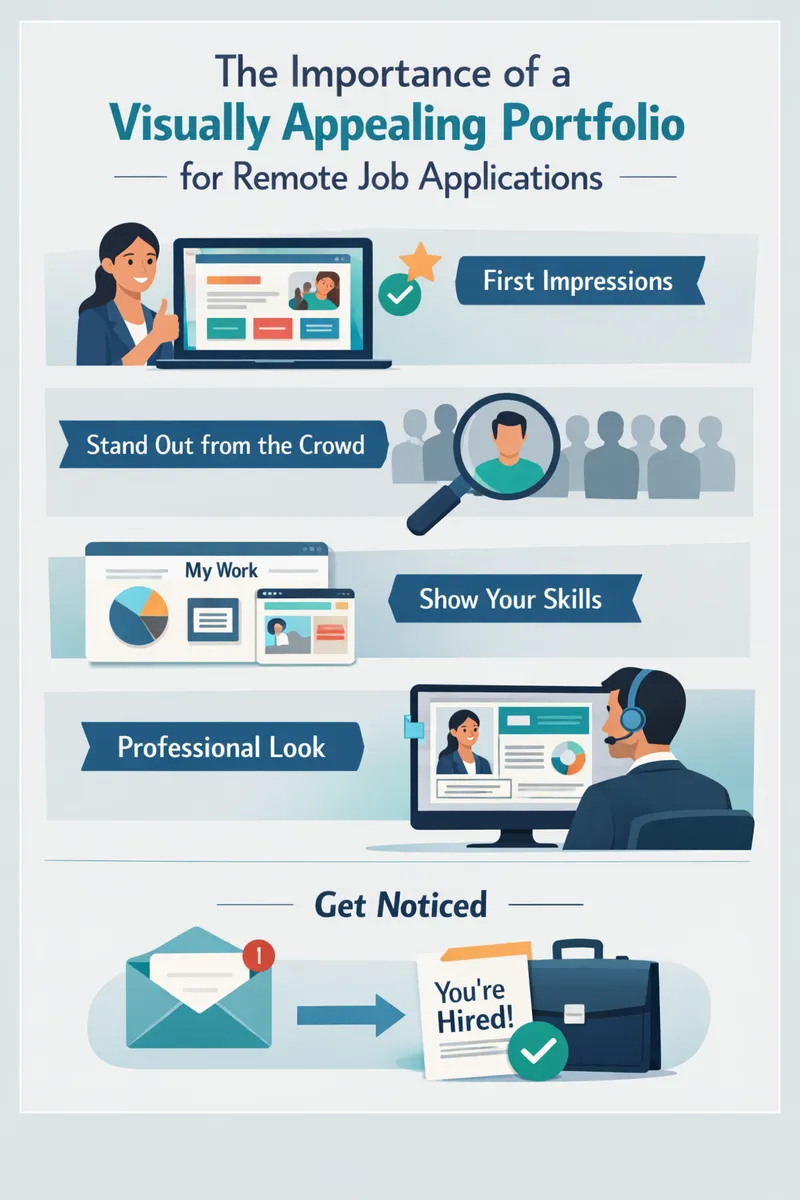
Showcasing the significance of a visually appealing portfolio design for remote job applications
How Can You Optimize Your Portfolio for Remote Interviews?
Before your remote interview, ensure your portfolio is readily available, well-organized, and aligns with the job description.
1. Tailor it for Each Role
- Job Description Alignment: Always adjust your portfolio to highlight the skills and experiences most relevant to the job you’re applying for.
- Practice Your Pitch: Be prepared to discuss each piece of your portfolio during the interview.
2. Know Your Tech
- Familiarize Yourself with Platforms: Whether using Zoom, Google Meet, or another platform, make sure all your tech works before the interview.
- Check Your Internet Connection: A solid connection can make or break your remote interview experience.
3. Ask for Feedback
- Get Opinions from Trusted Friends: Sharing your portfolio with others can help you get valuable feedback. Sometimes it takes an outside eye to see what you could improve.
| Feature | Portfolio Example | Pros |
|---|---|---|
| Work Samples | Projects showcased in a gallery format | Easy to navigate, visually engaging |
| Testimonials | Quotes from clients and colleagues | Adds credibility, shows reliability |
| Contact Information | Clearly displayed on every page | Makes it easy for employers to reach you |
Key Takeaways
- Only include your best work in your portfolio to stand out.
- Adding testimonials can enhance reliability.
- Tailor your portfolio for each remote interview.
Look, the competition for remote jobs is intense. But with a strong, unique portfolio, you're making a decisive statement about your professionalism. Remember that potential employers see your portfolio as a glimpse into your capabilities and who you are as a person.
If you want to get ahead, take the time to craft a portfolio that truly reflects your abilities. And don’t hesitate to check our tools like our Resume Builder or Resume Checker for additional support on your job search. You’ve got this!