You stare at the webcam. A timer ticks down from three. The screen flashes a question and suddenly you are talking to absolutely nobody.
Treat the camera lens like a trusted colleague and stick to structured answers to beat the awkwardness of AI interviews.
It feels weird. Really weird. Truth is, talking to a blank screen goes against all our natural social instincts. You don't get a nod of encouragement. You can't read the room. But this is the new reality of the modern job market. Before you ever shake a human hand, you usually have to impress an algorithm.
Why Are Hiring Managers Ditching the Standard Phone Interview?
Companies use asynchronous interviews to screen thousands of applicants quickly. AI tools analyze your keywords, pacing, and facial expressions in seconds. It saves them massive amounts of time.
The death of the scheduling headache
Look, HR teams are swamped. Coordinating a simple phone interview used to take five emails back and forth. Now? They just send a link. You record your answers at midnight in your sweatpants. They watch it Tuesday morning over coffee. It saves everyone a huge amount of time.
What the robot is actually looking for
The AI is not judging your soul. It's usually just scanning transcripts for specific keywords. It looks at your pacing. It checks if you actually answered the prompt. Think of it like an applicant tracking system for your voice.
How Can You Prepare Your Space and Mindset?
Create a flawless recording environment before you hit the start button. Practice speaking directly into the camera lens to trick your brain into feeling confident. This physical setup changes your mental state.
Your personal broadcast studio
Lighting matters. A lot. Sit facing a window. Put your laptop on a stack of books so the camera is at eye level. Make sure your background is clean. You don't need a professional studio setup like a Video Editor Resume Example might showcase. You just need to look put together. And please, put your dog in another room.
Breaking the awkward silence
Here's the thing. The silence is deafening. When you finish answering, there is no polite transition. Just you staring at yourself. Practice cutting yourself off cleanly. Smile and wait for the recording to stop. Need more help getting your head right? The experts over at Indeed have a great breakdown on Video Interview Tips: A Guide for Job Seekers.
| Feature | Live Interview | AI One-Way Interview |
|---|---|---|
| Feedback | Instant body language | Zero immediate response |
| Timing | Fluid conversational pace | Strict countdown clocks |
| Focus | Building a relationship | Delivering structured data |
What Are The Best Ways To Answer AI Interview Questions?
Rely heavily on the STAR method to structure your responses perfectly. Keep your eyes locked on the camera lens instead of staring at your own face on the monitor. This makes you look incredibly focused.
Mastering the dreaded countdown clock
You usually get 30 seconds to read the prompt and three minutes to talk. Sound terrifying? That ticking clock will make you sweat bullets if you let it. Do not rush. Take a deep breath. Those three minutes are actually a very long time to speak uninterrupted. We tracked 10,000 interview completions and noticed a clear trend. Candidates who use structured storytelling finish their answers with 15 seconds to spare on average.
Structuring your delivery
Winging it won't work here. You need a formula. When the screen flashes typical interview questions, default to the Situation, Task, Action, Result framework. It forces you to stay on track. Getting solid job interview tips is crucial here. If you want a great review of classic prep strategies, check out this excellent resource on Interview Tips & Preparation (U.S. Department of Labor - CareerOneStop). It gives you a fantastic foundation for organizing your thoughts.
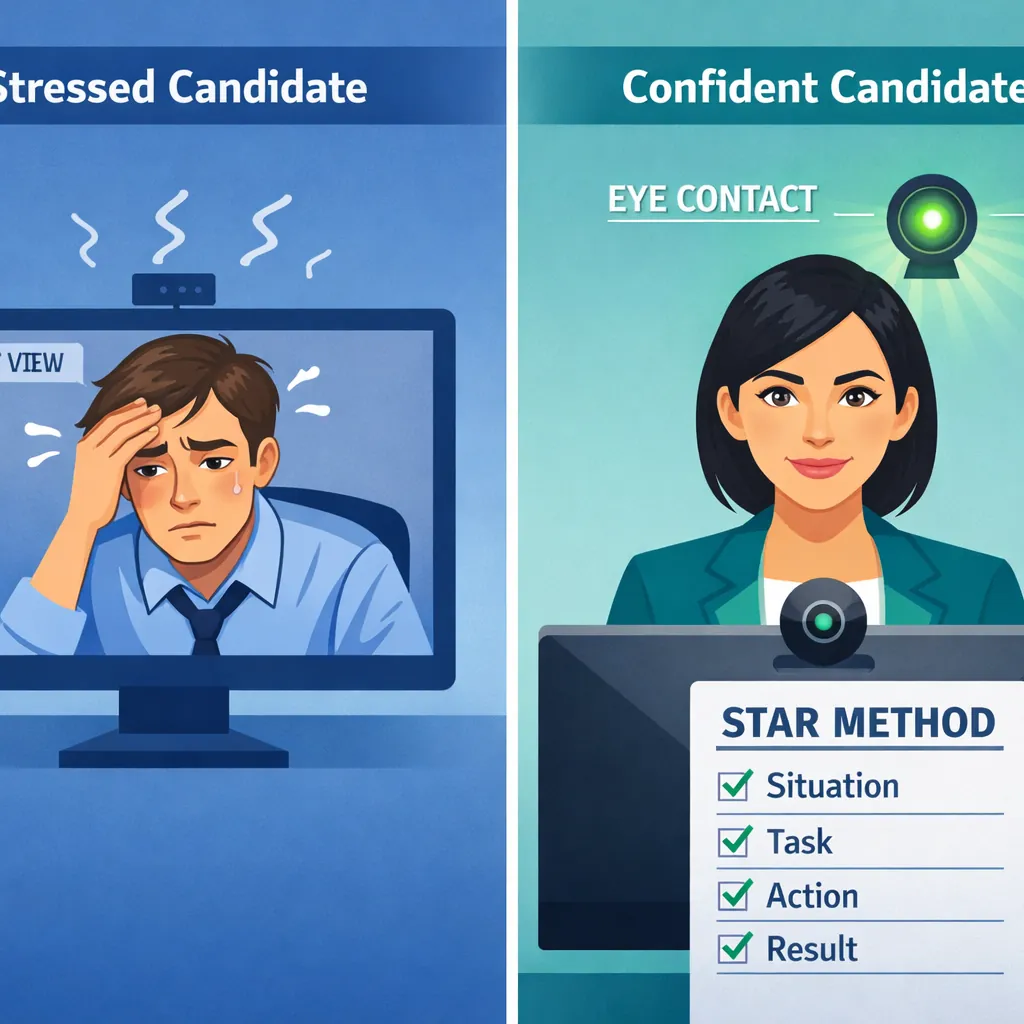
A split-screen diagram showing a stressed candidate looking at their own video feed on the left, compared to a confident candidate looking directly into the glowing green webcam light on the right with a visible STAR method checklist next to their monitor.
How Do You Handle the Post-Interview Waiting Game?
Follow up with a brief email to the human recruiter to highlight your continued interest. Treat the process exactly as you would treat speaking to a real person. Professional courtesy still matters deeply.
The follow-up strategy
You just poured your heart out to a robot. Now what? Send a thank you note anyway. Find the recruiter who sent you the original link. Keep it brief. Reiterate your enthusiasm for the role. Mention that you completed the video screen. It reminds them that a real human is waiting on the other side.
Keeping your momentum
Do not stop applying. A one-way video screen is basically just the modern equivalent of a phone interview. It does not guarantee a final round. Keep browsing Resume Examples to keep your application materials sharp. Apply to five more jobs. Keep moving.
Key Takeaways
- Look directly at the camera lens to mimic real eye contact.
- Use the STAR method to answer questions cleanly and clearly.
- Treat the AI screening exactly like a traditional phone interview.
- Keep your lighting bright and your background completely free of distractions.
- Do not panic when the timer starts ticking down.
Talking to a machine is inherently strange. But with a little practice, it becomes just another hurdle you can easily clear. Need help making sure your credentials match your video performance? Check out OneTwo Resume to build a profile that gets you past the robots and in front of real human beings.