Look, a well-crafted cover letter can make a world of difference in your job application. It’s often the first impression you make on a hiring manager, so getting the cover letter format just right is crucial for success. In this post, we’ll explore key elements to include in your cover letter that will not only get you noticed but also help you land those coveted interviews.
A strong cover letter follows a clear format, includes relevant details, and connects to the job description. It tells your story.
What Should Be in the Cover Letter Format?
The cover letter format should include an engaging introduction, professional body paragraphs that highlight your skills, and a strong closing statement.
Introduction: How to Hook the Reader
- Begin with a greeting. Address the hiring manager by name if possible. It shows you put some effort into researching the company.
- Open with a strong statement about why you applied for the position. For instance, share what excites you about the role or the company.
- Example:
- “I’m thrilled to apply for the Marketing Specialist position at XYZ Corp, where innovative campaigns drive impressive growth.”
Body: What Skills to Highlight
- Focus on relevant experiences. Tailor your skills to match the job description. This means using keywords found in the posting.
- Show your achievements. Use numbers to quantify your impact, like “increased sales by 20% over six months.”
- Bullet Points: They grab attention, so use them. Here’s what to include:
- Your relevant work history
- Specific projects you’ve completed
- Soft skills that align with the company culture
Closing: Make It Memorable
- Reiterate your enthusiasm for the role. Thank the hiring manager for their time.
- Include a call to action, like “I look forward to discussing my application.”
- Example closing line:
- “Thank you for considering my application. I can’t wait to talk more about how I can contribute to your team.”
How Do Cover Letter Examples Help?
Reviewing cover letter examples can provide valuable insight into crafting your own, especially regarding format and tone. They serve as templates.
Benefits of Using Cover Letter Examples
- They show effective ways to present backgrounds. You can see what works and what doesn’t.
- Different styles suit different industries. A creative industry may call for a more personalized approach than a corporate one.
- Examples boost confidence. Using a template allows you to focus on your content instead of formatting.
Where to Find Cover Letter Examples
- Check websites like Indeed Career Guide for high-quality samples. They also offer writing tips that are worth a look.
- Use our resume examples for full-package insight. A great resume and cover letter combo will set you apart.
Why Is It Important to Customize Your Cover Letter?
Customization is key in today’s job market. A one-size-fits-all cover letter can weaken your application.
The Dangers of Generic Letters
- Hiring managers can spot a generic letter from a mile away. It diminishes your professionalism.
- Personalizing your letter boosts your chances. According to a study from Jobvite, 83% of recruiters agree personalization matters.
- Tailoring shows your genuine interest in the role.
Tips for Tailoring Your Cover Letter
- Research the company culture and recent initiatives. Reference them in your letter.
- Match your qualifications to specific requirements in the listing. Use similar language.
- Avoid clichés. Stand out by being genuine and straightforward.
| What to Include | Purpose | Best Practices |
|---|---|---|
| Personalized greetings | Shows attention to detail | Use hiring manager's name |
| Specific skills | Aligns with job requirements | Use keywords from job description |
| Quantifiable achievements | Demonstrates your impact | Use numbers to strengthen claims |
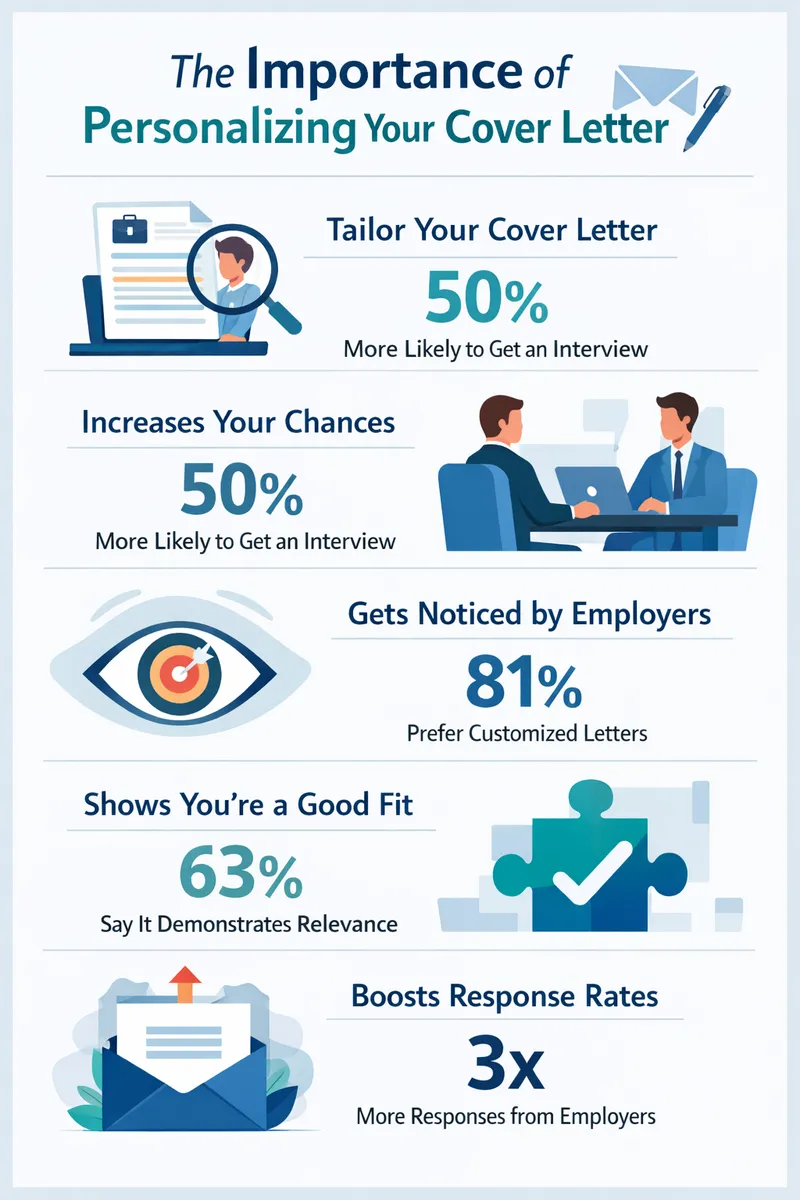
Visual showing the importance of tailoring and customizing a cover letter with statistics supporting personalization.
In conclusion, mastering the right cover letter format can drastically improve your chances of landing an interview. You don’t need to reinvent the wheel; just follow a solid format tailored to each position.
Key Takeaways
- Use a clear structure with an engaging introduction, detailed body, and impactful closing.
- Customization is crucial, tailor your content to match the job description and company culture.
- Always include specific examples to back up your claims.
So, start crafting your cover letter today and make that first impression count! If you need further assistance, check out our Resume Builder for tips on matching your resume to your cover letter, or visit our resume checker to ensure you're on the right track. Trust me, every detail matters!
Ready to make your job application shine? Let's do this together!