Opening Insight
Finding the right salary during negotiations requires preparation, confidence, and a clear understanding of your worth.
Salary negotiation can feel like a daunting task, but it doesn’t have to be. With the right strategies, you can approach negotiations with confidence. So, let’s break it down.
What Are Your True Salary Expectations?
Before entering any negotiation, knowing your salary expectations is crucial. It sets the tone for your entire discussion and empowers you.
Research Salary Ranges
Understanding salary data can be the difference between settling for less or getting what you deserve. Here’s how to get started:
- Use Online Tools: Websites like the Bureau of Labor Statistics and Glassdoor can help you gauge salary ranges based on role and location.
- Network: Talk to peers in your industry. Ask them what they think is a fair salary for someone in your position. Their insights can be invaluable.
- Consider Industry Standards: Some industries tend to pay more or less based on demand. Research your specific field.
Calculate Your Value
Look, knowing your value means you can back it up. Consider:
- Years of Experience: More experience usually translates to a higher salary.
- Skills and Certifications: If you've got skills that are hot in the market, leverage them.
- Pain Points You Solve: Think about the problems you can solve for the company. If you can save them money or improve efficiency, you deserve a higher salary.
How Should You Position Yourself in Negotiations?
Positioning yourself effectively is about confidence and clarity. Employers want to know why you're worth the salary you're asking for.
Craft Your Elevator Pitch
And I mean a killer one. When you ask for a raise or negotiate salary, you'll need a succinct pitch. Include:
- Your Achievements: Talk about specific contributions you've made in previous roles.
- What You Will Bring: Articulate what you will deliver to this new role.
Use Numbers to Justify Your Request
Numbers talk. Provide specific examples, like:
- Past Salary Data: If you were previously earning significantly more in a similar role, use that to your advantage.
- Market Data: If research shows the average salary for your role is higher than what’s being offered, present it.
| Role | Average Salary | Your Expected Salary |
|---|---|---|
| Software Engineer | $110,000 | $120,000 |
| Marketing Manager | $80,000 | $90,000 |
| Sales Executive | $70,000 | $75,000 |
What Should You Do When Facing Pushback?
Pushback is common. Responding effectively can actually turn the table in your favor.
Remain Calm and Composed
But don't just sit there. Here's what to consider:
- Listen Actively: Understand the employer's concerns. They might be constrained by budget.
- Ask Questions: “What would it take for us to reach that number?” This shows you’re willing to engage in a discussion.
Be Ready to Walk Away
And don’t forget, you're allowed to walk away. Here’s where it gets real:
- Know Your Bottom Line: Have a clear figure in mind that you won't go below.
- Evaluate the Entire Offer: Sometimes benefits, culture, and work-life balance can outweigh a lower salary.
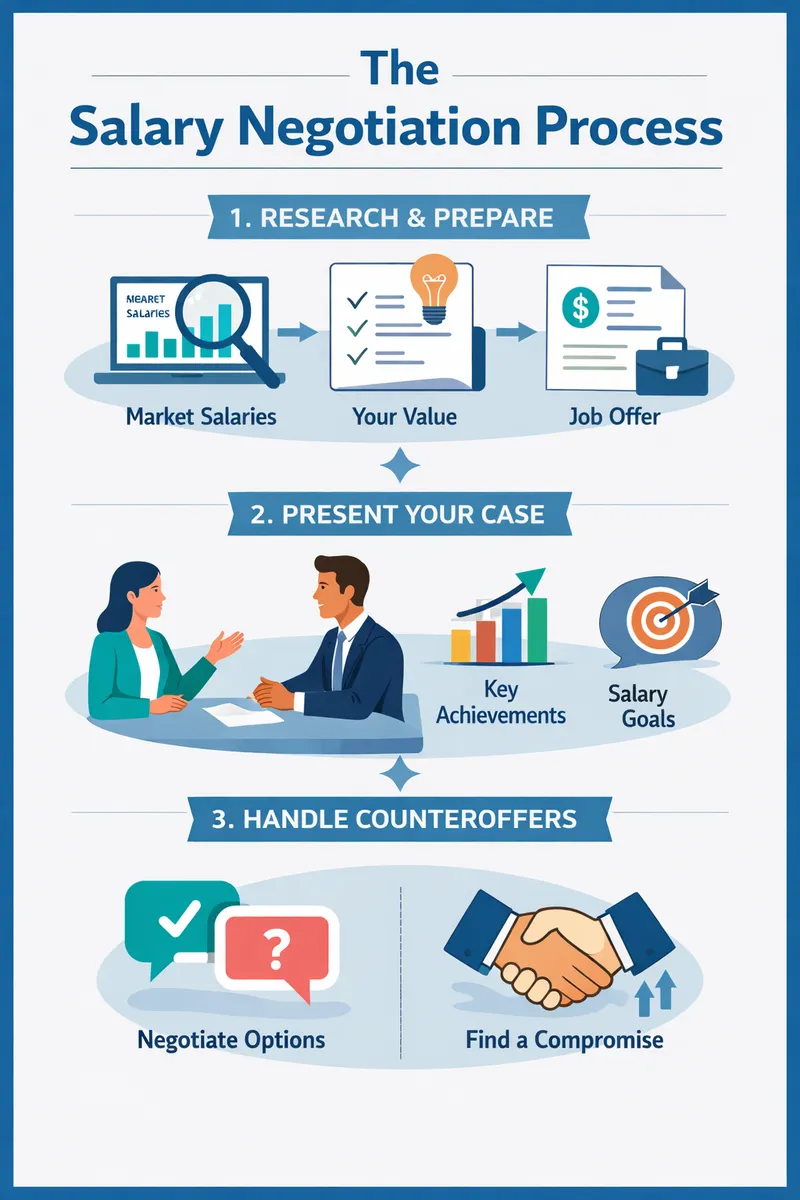
Visual representation of the salary negotiation process, including research steps, presenting your case, and handling counteroffers.
Key Takeaways
- Research your market and industry standards.
- Clearly articulate your value and what you bring to the table.
- Be prepared to respond to pushback calmly and confidently.
- Know your bottom line and be willing to walk away if necessary.
In conclusion, negotiating your salary can feel challenging, but with proper preparation and a clear understanding of your worth, you can navigate these discussions effectively. Remember, it’s about finding a mutually beneficial agreement. If you’re looking for more tips on honing your application materials, be sure to check out our Resume Builder and Resume Checker.
Want to level up your career? Let OneTwo Resume help you shine in your next negotiation.