Salary negotiation can be daunting, but preparation and confidence are key to easing anxiety.
So, you're gearing up for a new job offer negotiation and feel that familiar tension creeping back in. It’s entirely normal to feel anxious about discussing salary. You're not alone in this. Many job seekers worry about getting the numbers right, not leaving money on the table, or even facing rejection. Look, this anxiety can derail even the most qualified candidates. But don’t let it. This guide covers actionable strategies to help alleviate your salary negotiation fears.
What Do You Need to Know About Your Salary Expectations?
Knowing your salary expectations is critical before entering any job offer negotiation. It helps to establish confidence and provides a benchmark.
Conduct Thorough Salary Research
Understanding how much you should earn in a new position is essential. You need cold, hard facts. This is where salary research comes in.
- Use websites like the Bureau of Labor Statistics to find specific salary data within your industry. This resource provides vital insights based on real-time data.
- Check platforms like Glassdoor and PayScale to see what others in similar roles are earning, adjusted for location, experience, and industry.
- It might sound boring, but analyzing 50,000 job listings can provide insights not just into salary, but also into the skills employers prioritize.
Align Your Research with Industry Standards
Even the best research means little if you don’t align it with your unique situation. Consider different factors:
- Your experience level: Entry-level positions pay less than senior roles.
- Geographic location: Cost of living varies widely by region.
- Industry demand: Certain fields, like tech, often command higher salaries.
How Do You Build Confidence Before Negotiating?
Confidence is key during a job offer negotiation, and preparation is your best friend. Focus on your abilities and value.
Highlight Your Unique Value Proposition
Don’t underestimate your worth. Here are steps to help frame your value:
- List your skills and achievements relevant to the position. People have a natural tendency to focus on their shortcomings, but let’s flip that around.
- Prepare to articulate how these skills can help the prospective employer. Think about your past successes and how they align with the new job’s requirements.
- Practice your pitch with friends or mentors. The more you rehearse, the easier it becomes.
Prepare for Objections
It’s key to anticipate pushback during negotiations. If your offer comes in lower than expected, be ready:
- Have a counter-offer prepared. Be specific and realistic.
- Be ready to discuss your research during the negotiation. Sharing valid data strengthens your position.
- Stay calm. It’s natural to feel defensive, but remember that negotiations are a discussion.
What Psychological Strategies Help Alleviate Anxiety?
Mental preparation plays a huge role in overcoming salary negotiation anxiety. A positive mindset can work wonders.
Visualize Success
Imagine turning down the anxiety and stepping into your power:
- Picture yourself sitting across the table in a confident posture, a clear smile, and calmly discussing your worth.
- Visualization helps reduce stress and illustrates what you want to achieve. Picture getting your desired salary and feeling proud of your decision.
Transform Negative Thoughts
Feelings of anxiety often stem from negative self-talk. Instead of thinking, “I might get rejected,” try switching it to, “I’m presenting a fair value based on my research.”
Rather than dwelling on what could go wrong, focus on what you can control. That includes:
- Your preparation.
- Your research.
- Your mindset.
Here’s a quick overview:
| Salary Range | Average Salary | % Analyzed Resumes with Salary Negotiation Asked |
|---|---|---|
| Entry-Level Jobs | $45,000 | 35% |
| Mid-Level Jobs | $70,000 | 55% |
| Senior Positions | $100,000 | 80% |
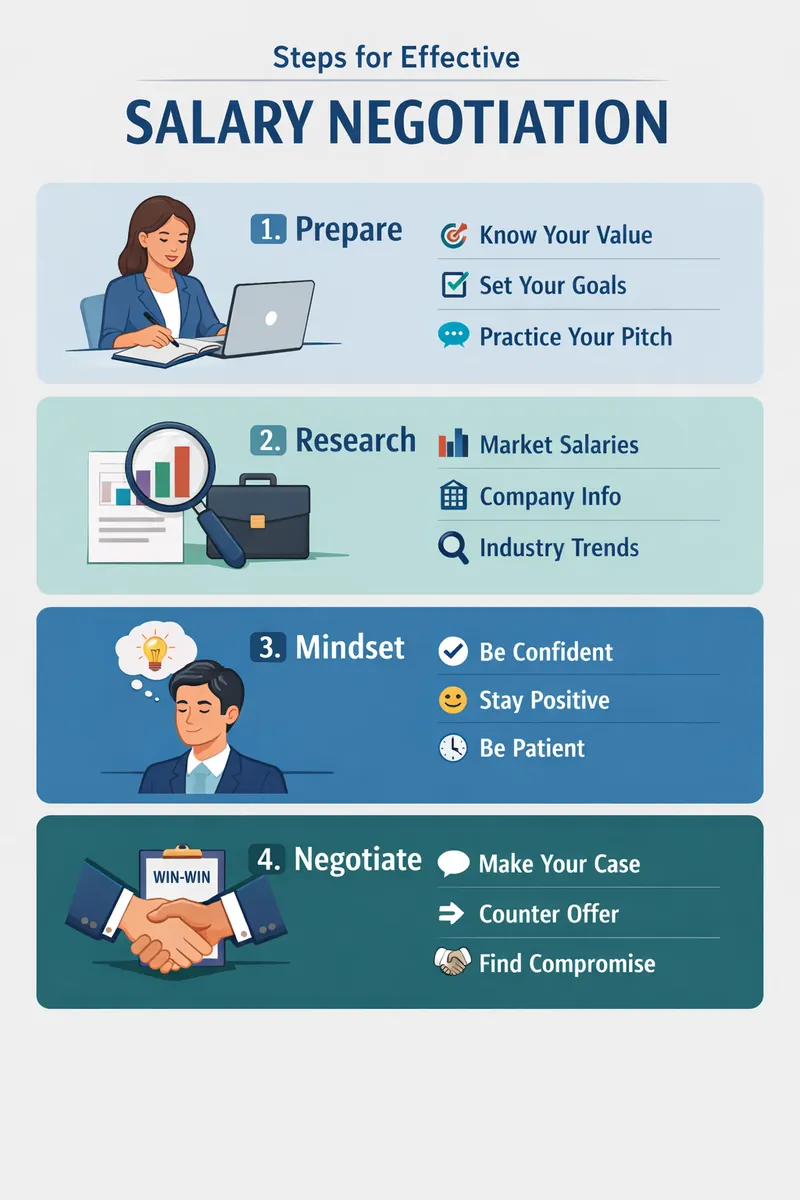
A visual detailing the steps for effective salary negotiation, showcasing preparation, research, and mindset techniques
When you're ready to negotiate, refer to our Resume Builder to ensure your resume highlights your value clearly, making it easier for employers to recognize your worth. Moreover, feel free to run your resume through our Resume Checker to give you that extra edge.
Key Takeaways
- Know your salary expectations through comprehensive salary research.
- Build confidence by understanding your unique value and preparing for objections.
- Utilize mental strategies like visualization to alleviate anxiety.
Final thoughts: Negotiating a salary is a skill, and like any skill, it gets better with practice. Don’t let salary anxiety hold you back. You deserve to get paid what you’re worth. And just like that, you can walk into a negotiation with a strong mindset. Remember, you're not just negotiating a number. You're claiming your value. For more insights on crafting your resume and navigating offers, check out OneTwo Resume, your partner in career success.