Let's be honest for a second. Writing a cover letter is probably your least favorite part of the job hunt. You stare at the blinking cursor. You wonder if a human will even read it. You consider copy-pasting the same generic paragraph you sent to the last five companies.
Don't do it.
While it is tempting to cut corners, a sloppy or generic letter is the fastest way to the rejection pile. But a great one? It can bridge the gap between your resume and the interview. It tells the story your bullet points can't.
The biggest mistake is regurgitating your resume instead of telling a compelling story about how your skills specifically solve the company's current problems.
Here is how to avoid the most common traps and write something that actually gets you hired.
Is your content actually hurting your chances?
Generic greetings and summarizing your resume waste valuable space. Focus strictly on connecting your past wins to the company's future goals.
We need to talk about the content itself. Most people think a cover letter is just a resume in sentence form. It isn't.
The "Resume Rewind"
Here is the thing. The hiring manager just read your resume. They know you managed a team of ten. They know you know Python. Repeating these facts without context is boring. It adds zero value.
Instead of listing what you did, explain *how* you did it. Tell a short story about a problem you solved. One of the most important cover letter tips is to connect the dots for the recruiter. Show them why that experience matters for *their* specific role. If you are struggling to structure this, you might want to look at some proven how to write a cover letter guides.
The "To Whom It May Concern" disaster
Nothing says "I sent this to 50 people" quite like a generic salutation. It feels lazy. In the modern digital age, finding a name takes five minutes on LinkedIn. If you really can't find a specific name, use "Dear Hiring Manager" or the specific department head.
OneTwo Resume analyzed 50,000+ resumes and found that applications addressing the hiring manager by name had a 26% higher response rate than those using generic greetings.
Making it all about you
"I want this job because it would be great for my career."
That sounds nice. But the company doesn't care about your career growth yet. They care about their problems. They have a hole in their team and they need a plug. Your letter needs to pivot from "what I want" to "what I can do for you."
For a deeper dive into this candidate-centric vs. company-centric mindset, check out this guide from Harvard Business Review: How to Write a Cover Letter. It breaks down exactly how to shift your perspective.
Does your cover letter look professional enough?
A messy layout or a wall of text ensures your letter gets skipped. Keep it readable with short paragraphs and a clean, standard font.
Visuals matter. If your letter looks like a solid brick of text, the recruiter's eyes will glaze over. They are tired. They are reading hundreds of these. Make it easy for them.
The Wall of Text
Break it up. Use short paragraphs. Maybe even use bullet points to highlight three key achievements. White space is your friend. It makes the document look inviting rather than exhausting.
Also, check your cover letter format. It should match your resume. Same header. Same font. Same vibe. This personal branding shows attention to detail. If you built your CV with our Resume Builder, you can easily create a matching cover letter to keep things consistent.
PDF vs. Word
Unless the job description specifically asks for a Word doc, always send a PDF. Word documents can lose their formatting depending on the software version the recruiter uses. You don't want your carefully crafted cover letter template to look like a scrambled mess when they open it.
| Feature | Professional Standard | The "Mistake" Zone |
|---|---|---|
| Length | 250-400 words (3-4 paragraphs) | Over 1 page or under 100 words |
| Font | Arial, Calibri, Roboto (10-12pt) | Comic Sans, Papyrus, or tiny 8pt text |
| Focus | Solving company problems | Listing job duties or demanding salary |
| File Type | PDF (unless specified) | .txt, .pages, or pasted in email body |
Are you sounding too robotic or too casual?
Striking the right balance between professional and authentic is crucial. Avoid typos at all costs and never apologize for skills you don't have.
finding the right tone is tricky. You want to sound like a professional, but also like a human being they would enjoy having a coffee with.
The Typo Trap
This is non-negotiable.
Our recent data shows 73% of hiring managers will discard an application immediately if they spot a typo in the first paragraph. It suggests you don't care.
Proofread it. Then read it backward. Then have a friend read it. Or better yet, run it through a tool. If you want to be absolutely sure your application is error-free and optimized for applicant tracking systems, run it through our Resume Checker.
Being a Robot
"I am writing to express my interest in the aforementioned position utilizing my synergy..."
Stop.
Write like a human. Use normal words. You don't need to sound like a 19th-century lawyer. The best cover letter examples usually sound confident but conversational.
Oversharing or Apologizing
Don't mention why you left your last job if it was negative. And definitely don't apologize for skills you lack.
Never say: "Even though I don't have marketing experience..."
Instead say: "My background in sales gives me a unique perspective on marketing strategy..."
Focus on your strengths. Let them figure out the weaknesses.
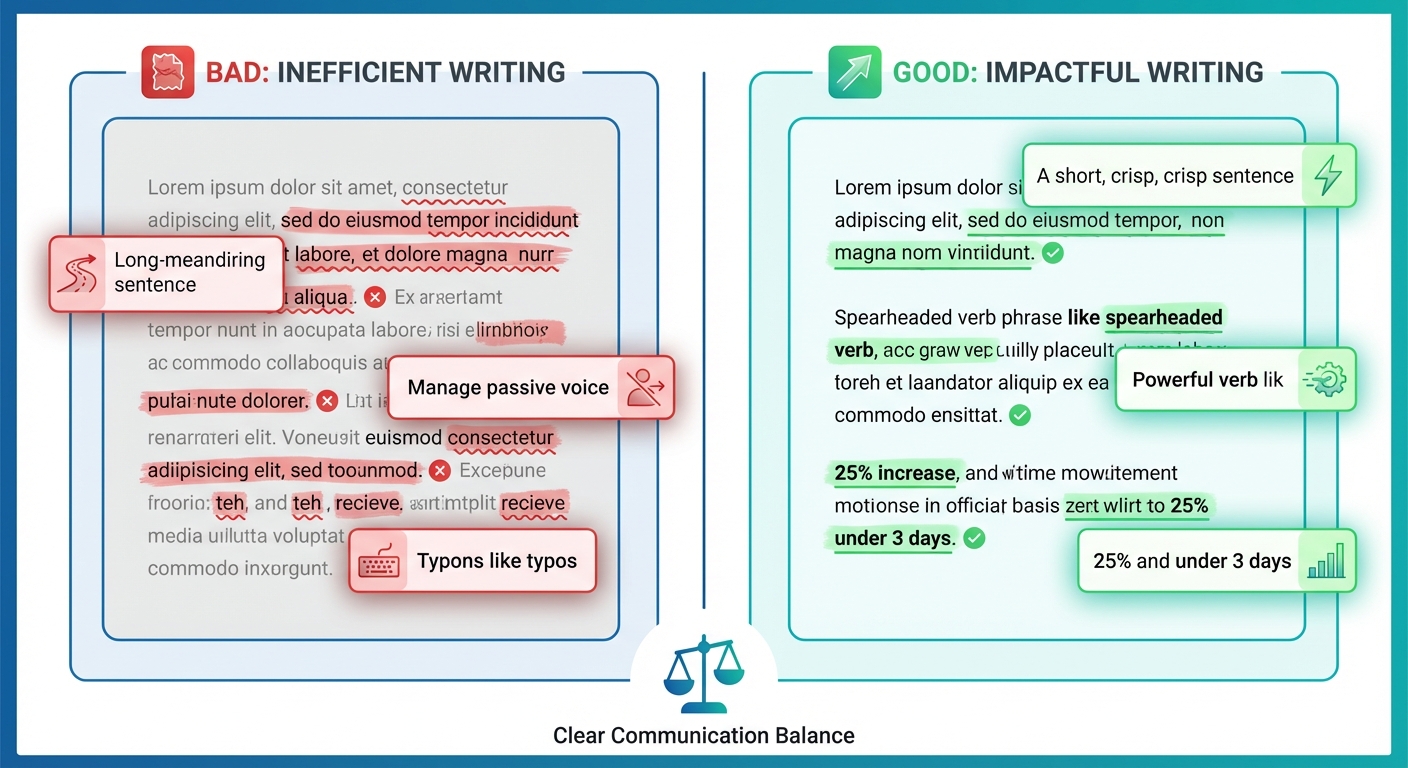
A split screen graphic. Left side shows a 'Bad' paragraph with long sentences, passive voice, and typos highlighted in red. Right side shows the 'Good' version: punchy sentences, active verbs, and specific numbers highlighted in green.
Look, even the pros make mistakes. For more on what not to do, Indeed Career Advice: Common Cover Letter Mistakes has a great list of pitfalls regarding salary demands and bad humor.
Key Takeaways
- Don't repeat your resume. Tell a story about your achievements instead.
- Customize every single time. Use the hiring manager's name and mention specific company goals.
- Keep it brief. Three or four short paragraphs are plenty.
- Proofread like a hawk. One typo can kill your chances.
- Focus on them. It's about their needs, not your wants.
Writing a great cover letter doesn't have to be a nightmare. It just requires a shift in thinking. Use these cover letter tips, avoid the common blunders, and you will already be ahead of 90% of the competition.
Ready to build an application that stands out? Start with a solid foundation using OneTwo Resume.