Making a change in careers can feel daunting, especially when you’re starting over in what might be considered a new career at 40. It’s normal to experience a whirlwind of emotions during this transition.
A positive mindset can significantly impact your experience during a career transition, making it easier to embrace change and see opportunities.
Why Is It Hard To Start A New Career At 40?
Transitioning to a new career at 40 often brings emotional challenges such as fear of failure, self-doubt, and anxiety about starting fresh. Recognizing these hurdles is the first step.
Understanding The Emotional Landscape
Starting a new career at 40 isn’t just about finding a job. You’re often leaving behind familiar ground. Here are some feelings you might face:
- Fear Of The Unknown: Changing careers can be scary. What if you don’t like the new job?
- Self-Doubt: You might question your abilities or whether you have the necessary transferable skills.
- Isolation: Feeling alone in your journey can be isolating, especially if your peers are settled in their careers.
Seeking Support
Truth is, you don’t have to navigate these feelings alone. Finding a support system can help:
- Community Groups: Local organizations often have resources for career changers.
- Online Forums: Platforms dedicated to career advice can offer insights and validation.
- Friends And Family: Share your experiences with them. You might be surprised at how supportive they can be.
How Do You Keep A Positive Mindset During A Career Change?
Cultivating a positive mindset is essential for resilience in the face of challenges. When you focus on growth instead of obstacles, you open up to possibilities.
Practices To Foster Positivity
Look, maintaining a positive perspective isn’t always easy. Here are ways to cultivate that mindset:
- Set Small Goals: Breaking down your career transition into smaller, achievable goals can help maintain motivation.
- Celebrate Small Wins: Every step counts. Did you update your resume? Celebrate it.
- Practice Gratitude: Reflecting on what you’re thankful for can shift focus away from stress.
Reframing Negative Thoughts
Not every thought has to be true. When self-doubt creeps in, try:
- Rationalizing Doubts: Ask yourself, “Is this thought based on fact?”
- Focus On Progress: Compare where you are now to when you started. Acknowledge how far you’ve come.
- Seek Feedback: Sometimes an outside perspective can validate your skills and boost your confidence.
What Are The Practical Steps To Make A Smooth Transition?
Transitioning careers is not just about emotional resilience. It requires organization, planning, and understanding the job market.
Assessing Your Transferable Skills
When thinking about a new career at 40, don’t forget to emphasize transferable skills. These are attributes gained from past roles that can apply to new opportunities. Consider:
- Communication Skills: Can you lead a team or present ideas? That’s valuable.
- Problem-Solving Abilities: Past experiences often provide insights for tackling new challenges effectively.
- Adaptability: In a new career, your ability to adjust and learn is crucial.
Practical Tools To Explore New Careers
Here are some resources to navigate your transition:
- Bureau of Labor Statistics: Check industry growth and average salaries.
- Indeed Career Guide: Practical advice for job seekers.
- Resume Builder and LinkedIn Optimizer: Tools to enhance your resume and online presence.
| Skills | Importance in New Career | Examples of Transferable Skills |
|---|---|---|
| Communication | High | Public speaking, teamwork |
| Problem Solving | High | Analytical thinking, creativity |
| Adaptability | Medium | Learning new software, flexibility |
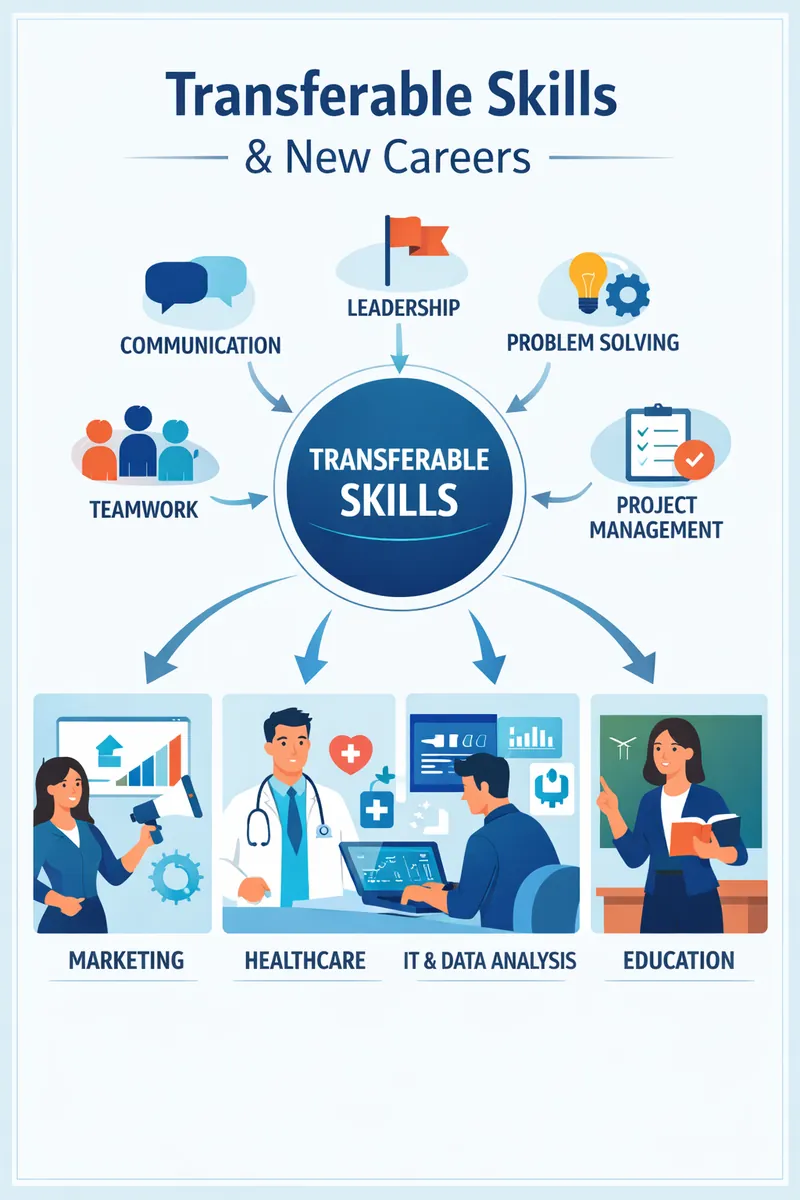
A visual representation of common transferable skills and how they apply to various new careers.
Key Takeaways
- Transitioning to a new career at 40 can bring emotional challenges, but support is available.
- Developing a positive mindset through small goals and gratitude helps.
- Understanding and marketing your transferable skills is crucial.
Making a shift in your career can feel overwhelming. But remember, it's also a chance for growth and renewal. If you’re facing a career transition, consider exploring resources like OneTwo Resume to help guide you in building your resume or refining your LinkedIn profile. Change can be tough, but it also opens doors you never knew existed.