Navigating the job market can be daunting, especially when it comes to acing behavioral interview questions. These questions are a staple in the hiring process, aiming to uncover your past job performance and how it might predict your success in a new role. For those seeking job interview tips, understanding how to tackle these questions can make all the difference.
"Highlight your problem-solving and adaptability skills in your answers."
Why Do Employers Ask Behavioral Questions?
"Behavioral questions help employers predict your future performance based on past actions."
The Purpose Behind the Questions
Employers use behavioral interview questions to gauge how candidates have handled situations in the past. This insight allows them to better predict how a job seeker might perform in a similar situation at their company. It's not just about what you did, but how you did it.
- One reason is to see your problem-solving skills in action.
- Another is to evaluate your adaptability to change.
- Lastly, they're looking for evidence of your teamwork capabilities.
Preparing for These Questions
Prepping for a behavioral interview means more than rehearsing standard responses. It requires reflection on past experiences and applying the STAR method (Situation, Task, Action, Result) for structuring answers. Consider:
- What challenges have you faced at work?
- How did you overcome them?
- What were the outcomes?
The Role of Video Interviews
With the rise of remote work, video interviews are becoming increasingly common. They present unique challenges and opportunities:
- Make sure your tech setup works.
- Treat it with the same professionalism as an in-person interview.
What Are Classic Behavioral Interview Questions?
"Employers often ask about times you've faced a challenge or demonstrated leadership."
Types of Questions You Might Encounter
Expect to discuss instances where you demonstrated critical job-related skills. Think about how you approached challenges, worked with a team, or led a project.
- Example: Describe a time you led a team through a difficult project.
- How did you manage a conflict within a team?
Using the STAR Method
The STAR method is your best friend when answering these questions. It provides a clear and concise framework for your responses.
- Situation: Set the context for your story.
- Task: Describe what your goal was.
- Action: Explain the steps you took.
- Result: Share the outcome.
Practicing Your Answers
The more you practice, the more comfortable you'll become with your stories. Remember, authenticity is key.
- Share real examples from your past.
- Keep your answers focused and relevant.
Tips for Nailing Your Behavioral Interview
"Preparation and self-reflection are key to success."
Before the Interview
- Review the job description carefully.
- Reflect on your experiences that best match the role's requirements.
During the Interview
- Listen carefully to each question.
- Use the STAR method to structure your answers.
- Maintain eye contact, even in a video interview.
After the Interview
- Send a thank you email.
- Reflect on what went well and what you could improve next time.
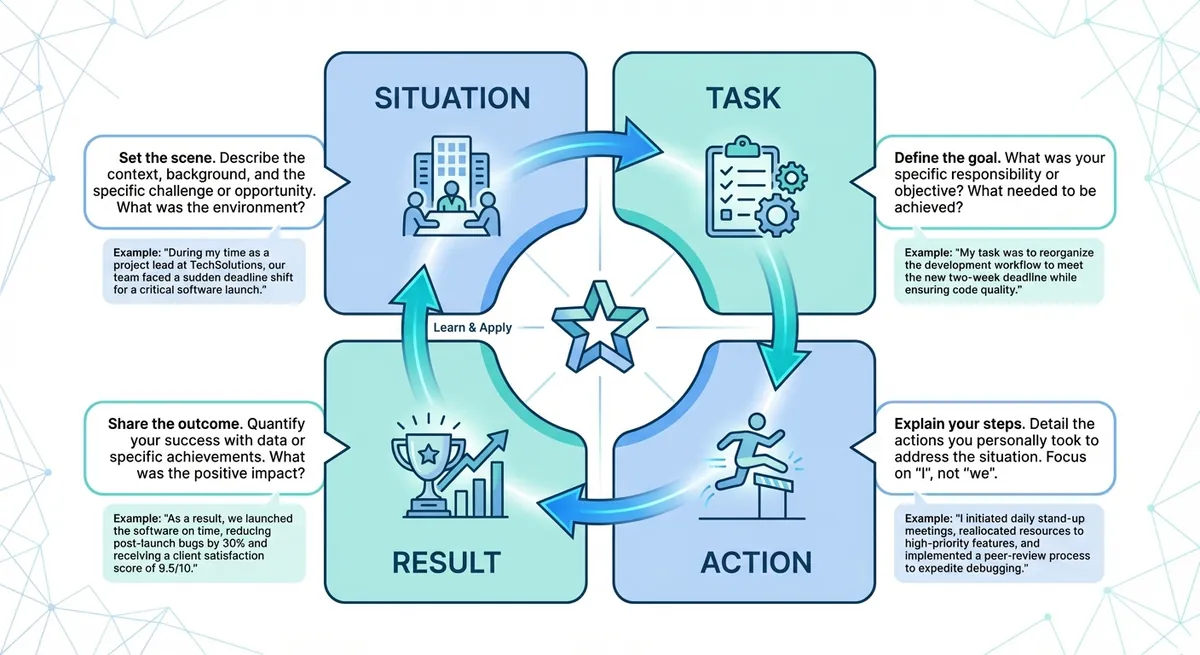
Visual breakdown of the STAR method, including examples of Situation, Task, Action, Result
For further insight, explore these resources on job interview tips:
- Performance Based Interviewing (PBI) Sample Questions
- 30 Behavioral Interview Questions to Prepare For
For help with your job search documents, don't forget to:
Key Takeaways
- Understand the purpose behind behavioral questions.
- Use the STAR method for clear, effective answers.
- Practice makes perfect.
If you're in the midst of job hunting, remember that a stellar resume is your first step towards landing that interview. Consider tapping into resources like OneTwo Resume to polish your resume and boost your hiring potential.