You probably hear it all the time. "It's not what you know, it's who you know." But that advice is frustratingly vague. It doesn't tell you how to know people. Especially if you are sitting behind a screen. Networking used to mean awkward coffee meetings and handing out business cards. Now it happens in the comments section and DMs.
Here is the thing. Most people treat LinkedIn like a digital Rolodex. They collect names. They don't build relationships. That is a mistake. You need a strategy that turns strangers into allies. It requires a bit of effort. But the payoff is huge.
Effective LinkedIn networking relies on personalizing every connection request and engaging with content rather than just asking for favors immediately.
Why does your profile matter before you send a single message?
You cannot network effectively with an empty profile because it serves as your social proof and validates your skills before a conversation begins.
Imagine walking up to someone at a conference wearing a mask. You introduce yourself. You ask for a job. But they can't see your face. That is exactly what sending a connection request with a bare-bones profile feels like. It's creepy. And it doesn't work.
Your profile is your landing page. Before anyone accepts your request, they will click your name. They want to know if you are real. They want to know if you are relevant.
This brings us to the most critical LinkedIn profile tips for networking. Your headline needs to be more than just your job title. It should explain how you help people. Your summary needs to tell a story. Don't just list skills. Explain your passion. People connect with humans. Not lists of keywords.
Look at the numbers.
If you aren't sure where your profile stands, you can check our LinkedIn Optimizer to identify gaps. Fix the foundation first. Then start building the house.
The photo factor
It sounds superficial. But it matters. Profiles with professional photos get significantly more engagement. You don't need a studio headshot. A clean background and good lighting work fine. Just smile. You want to look approachable.
Skills and endorsements
These act as trust signals. If you claim you are an expert in Python, having 20 people vouch for that helps. It validates your outreach. When you message a stranger, this social proof reduces their skepticism.
How should you reach out to people you don't know?
Cold outreach works best when you focus on curiosity and common ground instead of asking for a job in the very first message.
This is where most LinkedIn networking goes wrong. We have all received that message. The one that starts with "Hi" and immediately asks for a referral. Don't be that person. It's transactional. It's rude.
Your goal is to start a conversation. Not close a deal. LinkedIn for job seekers is a marathon. It is not a sprint.
Here is a simple rule. Never send the default connection request. Always add a note. You have 300 characters. Use them well. Mention a post they wrote. Mention a mutual connection. Mention a project of theirs you admire. Show them you did your homework.
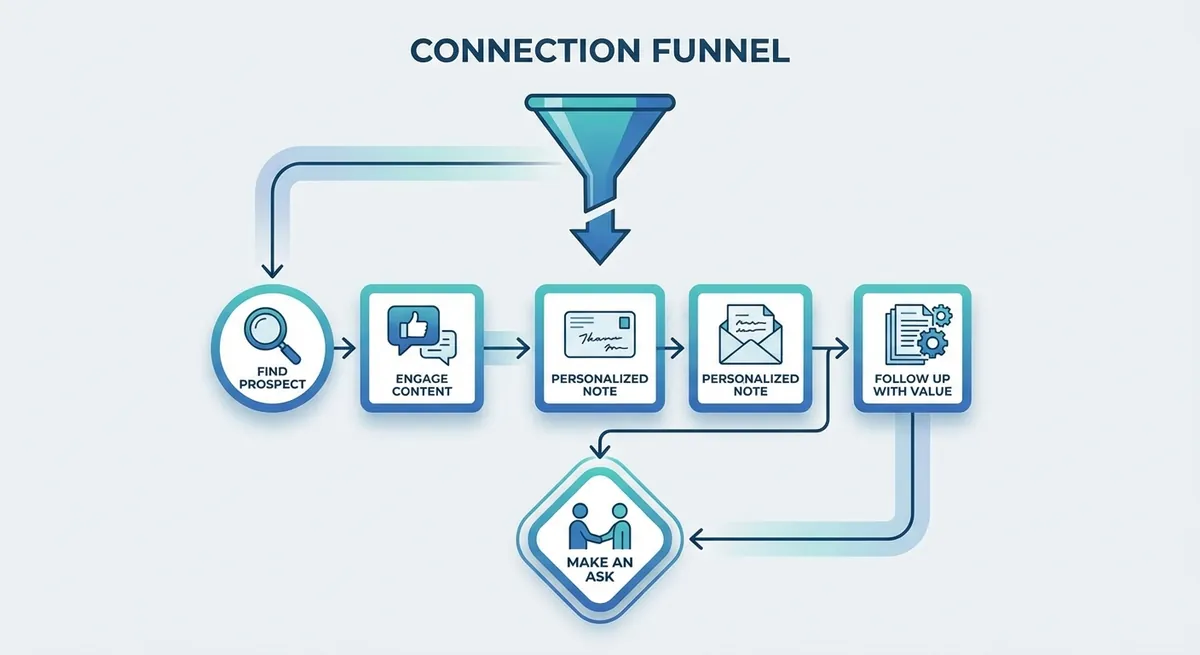
A flowchart showing the 'Connection Funnel' starting from Finding a Prospect -> engaging with their content -> sending a personalized note -> following up with value -> making an ask
The warm introduction
Cold messaging is hard. Warm introductions are easier. Look for mutual connections. Ask that mutual friend for an intro. It changes the dynamic completely. Trust is transferred. You aren't a stranger anymore. You are a friend of a friend.
According to a Harvard Business Review article on A Beginner’s Guide to Networking on LinkedIn, you should focus on building long-term relationships rather than immediate gains. This mindset shift is vital. You are planting seeds.
Give before you take
This is the golden rule. Offer value first. Send them an article relevant to their industry. Congratulate them on a work anniversary. Comment on their posts. When you eventually ask for advice or a chat, they will be much more likely to say yes. They already know you. You aren't just a random notification.
What if you hate writing posts?
Commenting on industry posts provides 80% of the visibility with 20% of the effort compared to writing original articles.
Many people are terrified of posting. They think they need to be "thought leaders." They think they need to write viral essays. You don't. You can be a "thought commenter."
Find five to ten people in your industry who are active. Turn on notifications for their posts. When they post, leave a thoughtful comment. Not just "Great post!" Add your perspective. Ask a question. Disagree respectfully.
This puts your face and headline in front of their entire network. It's high visibility. Low pressure.
They want to see how you think. They want to see how you interact with others.
Active vs. Passive Strategies
| Strategy | Action | Effort Level | Connection Quality |
|---|---|---|---|
| The Sprayer | Sending 50 generic requests a day | Low | Very Low |
| The Liker | Clicking "like" on everything | Low | Low |
| The Commenter | engaging in discussions | Medium | High |
| The Creator | Writing original posts | High | Very High |
| The DM Builder | Personalized 1-on-1 messages | High | Highest |
If you are tight on time, be a Commenter. It yields the best return on investment for busy professionals.
How do you keep connections from going cold?
A quarterly check-in message without an agenda keeps you top-of-mind and makes future requests feel natural rather than desperate.
Building the network is step one. Keeping it alive is step two. You can't just collect people and forget them. That's hoarding. Not networking.
Set a reminder. Every few months, scroll through your messages. see who you haven't spoken to in a while. Send a quick note. "Hey, saw this article and thought of you. Hope you're doing well."
No ask. No pitch. Just human connection.
Truth is, the Bureau of Labor Statistics: Networking Tips emphasizes that networking is an ongoing process, not something you do only when unemployed. Consistency is the secret sauce.
And while you are maintaining these relationships, make sure your own documents stay ready. If a connection suddenly asks for your CV, you don't want to scramble. Keep your history updated with our Resume Builder. It saves you the panic later.
Using the "Alumni" tool
One of the best LinkedIn profile tips involves the Alumni tool. Go to your university's LinkedIn page. Click "Alumni." You can search by where they live and where they work. Reach out to them. "Hey, we both went to State University. I see you're working at TechCorp. I'd love to hear about your experience there."
School spirit is a powerful icebreaker. It works almost every time.
Networking doesn't have to be scary. It doesn't have to be fake. Be curious. Be helpful. And most importantly, be human. The jobs and opportunities will follow.