Navigating the waters of salary negotiation can be tricky. You're not alone if the thought of negotiating your salary makes you nervous. But with the right approach and preparation, you can confidently secure the salary you deserve. Here's a guide, packed with scripts and tips, to transform how you negotiate your next pay raise or job offer.
"The key to successful salary negotiation is thorough salary research and clear communication."
Why is Salary Research Crucial?
"Salary research provides leverage by equipping you with market standards."
- Understanding the Market Rate
Before you even start negotiating, it's essential to know the going rate for your position in your specific industry and location. Salary research helps you understand where your offer stands in comparison.
- Empowering Your Position
Information is power. Knowing average salaries for your role means you're less likely to undersell yourself and more likely to feel confident in your negotiations.
- Realistic Expectations
Having accurate data makes your expectations realistic, making it easier to find a middle ground with employers.
How to Conduct Effective Salary Research
Knowing the value of your role in the market is the first step. Use tools like PayScale and Glassdoor for insight into what others in your role and location are earning.
- Check out job postings
- Talk to industry peers
- Review salary surveys
How to Use Salary Research in Negotiation?
"Salary research allows you to negotiate with facts, setting the stage for a productive conversation."
- Highlighting Your Worth
Your salary should reflect your skills, experience, and the value you bring to the company. Present your salary research findings to make a case for your desired salary.
- Discussing Your Package Holistically
Remember, salary is just part of your compensation. Benefits and perks can also be negotiated. Think broadly about what will make an offer satisfying for you.
- Remaining Flexible
Sometimes, the budget won't budge. If the salary isn't negotiable, consider asking for other benefits like more vacation time or remote work flexibility.
Scripts That Win Negotiations
"Having a clear script can calm your nerves and keep the conversation on track."
- When You're Offered a Job
"Thank you so much for this offer, I'm really excited about the opportunity. Based on my salary research, I was anticipating a range more around [Your Target Salary]. Could we discuss this further?"
- When You're Pushed for a Number
"I would prefer to understand more about the role and its responsibilities before discussing specific numbers. What's the budgeted range for this position?"
- If They Can't Meet Your Number
"I understand budget constraints. Can we discuss other compensation elements, such as bonus potential or benefits?"
| Negotiation Stage | Tip | Example Script |
|---|---|---|
| Initial Offer | Show appreciation | Thank you for the offer, but based on my salary research, I was expecting... |
| Counteroffer | Be flexible | If we can't adjust the salary, could we explore...? |
| Final Discussion | Reiterate value | I'm excited about the role and confident I can bring... |
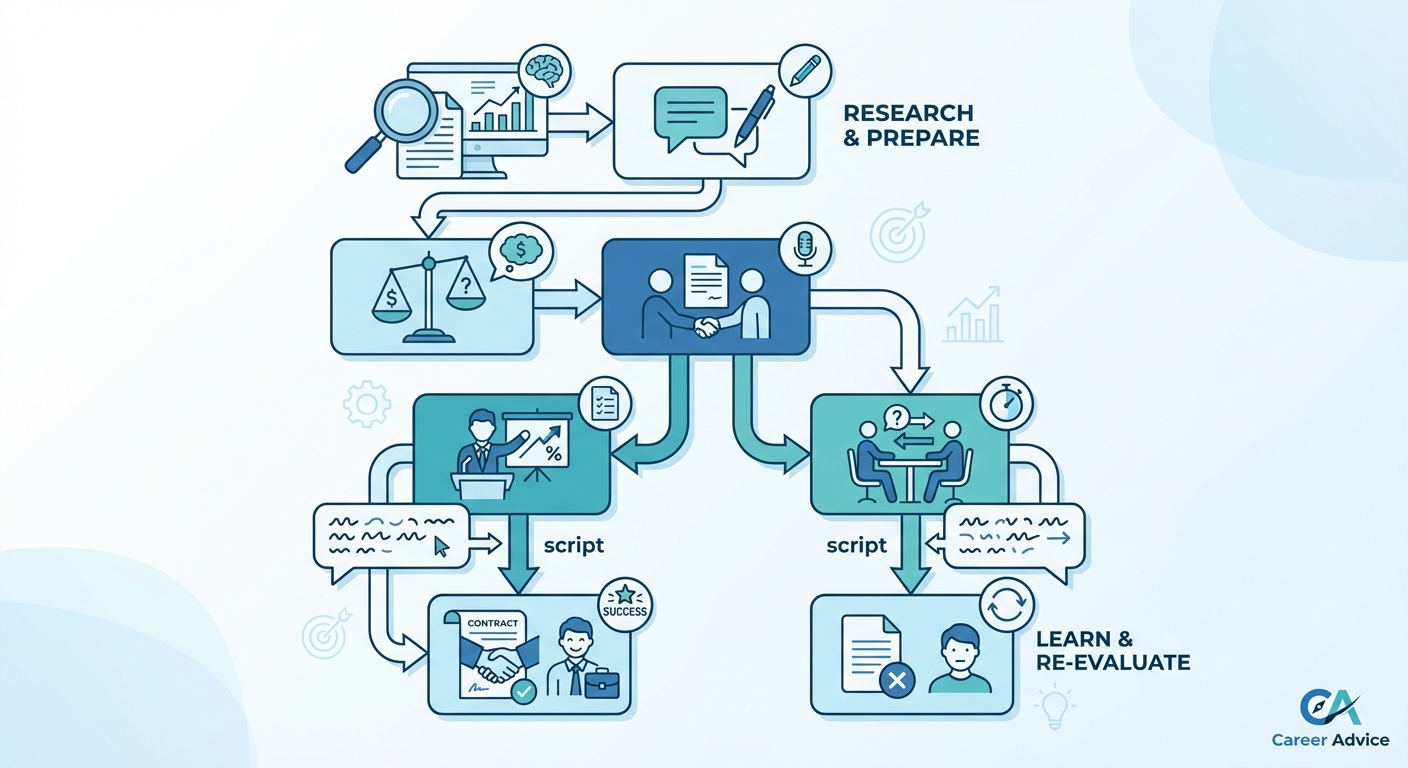
A flowchart detailing the steps of effective salary negotiation, incorporating salary research and specific scripts for various scenarios.
Remember, salary negotiation is a back-and-forth process. It's about finding that sweet spot where both you and the employer feel valued and satisfied. For more tips on preparing for this important conversation, visit our Resume Builder for polishing your resume and our Resume Checker for making sure your application is top-notch.
Key Takeaways
- Conduct thorough salary research before negotiating.
- Use specific scripts to guide your negotiation process.
- Consider the entire compensation package, not just the base salary.
Looking to advance your career? OneTwo Resume is here to help with tools and resources that support your journey.