The dream is alive and well. You wake up, grab coffee, and open your laptop without ever sitting in traffic. But you aren't the only one chasing this. Competition is fierce right now. For every listing you see, hundreds of other applicants are flooding the inbox. It feels impossible to get noticed.
Here's the thing. Most people apply for remote roles exactly the same way they apply for office jobs. And that is a huge mistake. Remote employers aren't just looking for skills. They are looking for trust. They need to know you won't disappear the second you clock in.
To stand out for remote roles, you must demonstrate high agency and asynchronous communication skills through your application materials before you ever speak to a human.
Why aren't standard applications working?
Traditional resumes focus on attendance and daily duties, but remote hiring managers prioritize output, self-management, and familiarity with digital collaboration tools.
The "Trust Gap" in Resumes
When a hiring manager reads your resume, they are asking one question. "Can I trust this person to work without a babysitter?" If your resume reads like a list of tasks you were told to do, you're going to lose. You need to frame your experience around results.
OneTwo Resume analyzed 50,000+ resumes and found that only 14% of applicants specifically mention "asynchronous communication" or "self-directed project management" in their summaries. This is a massive missed opportunity. You can easily beat the other 86% just by changing your vocabulary.
Start your bullet points with verbs that imply independence. Use words like "Orchestrated," "Led," or "Developed." And don't just list your duties. List your wins. Did you reduce meeting times? Did you implement a new software tool? Mention it.
If you aren't sure if your resume screams "independent worker," you should run it through a Resume Checker to see how it scores against job descriptions. It can spot the gaps you might miss.
Highlighting Tech Proficiency
It sounds obvious. But you would be amazed at how many people leave this out. You cannot just say you are "good with computers." Be specific. List the tools remote teams actually use.
Slack. Zoom. Trello. Asana. Jira. Notion.
If you have used them, list them. If you haven't used them, go learn the basics on YouTube this weekend. Then list them. You need to lower the perceived training cost. A manager wants to know you can log in on day one and start working. They don't want to spend three days teaching you how to tag someone in a comment.
Does your digital presence prove you can work from home?
Your online profile acts as your first remote interview, proving you can maintain a professional digital identity without physical supervision.
The LinkedIn Audit
Recruiters will look you up. If your profile is barren or unprofessional, they assume your remote work habits will be too. Your profile needs to look active and engaged. A static profile suggests a static employee.
Harvard Business Review notes in their guide on how to get a job in a remote-first company that demonstrating your ability to communicate clearly in writing is paramount. Your "About" section shouldn't just be a bio. It should be a sample of your writing style. keep it crisp. Keep it error-free.
Showcasing Soft Skills
Remote work requires a different set of soft skills. Empathy. Over-communication. Patience. You need to weave these into your narrative. Truth is, working from home can be lonely. Companies want people who contribute to culture, not just take from it.
Our recent data shows 73% of hiring managers for remote roles rank "written communication" higher than "years of experience" when making final decisions. Why? Because in a remote setting, bad writing causes expensive mistakes.
How do you ace the video interview?
Treating a video call with the same formality as a boardroom meeting signals that you have the infrastructure and mindset to handle a professional remote environment.
Your Home Studio Matters
Look, I know it shouldn't matter what your room looks like. But it does. If your background is messy or your audio echoes, the interviewer subconsciously thinks you are disorganized. You don't need a professional studio. You just need a clean corner.
Put a lamp behind your laptop to light up your face. Wear headphones to cut the echo. Clear the pile of laundry off the chair behind you. These small details signal that you take your workspace seriously. It tells them you are ready to find remote jobs and keep them.
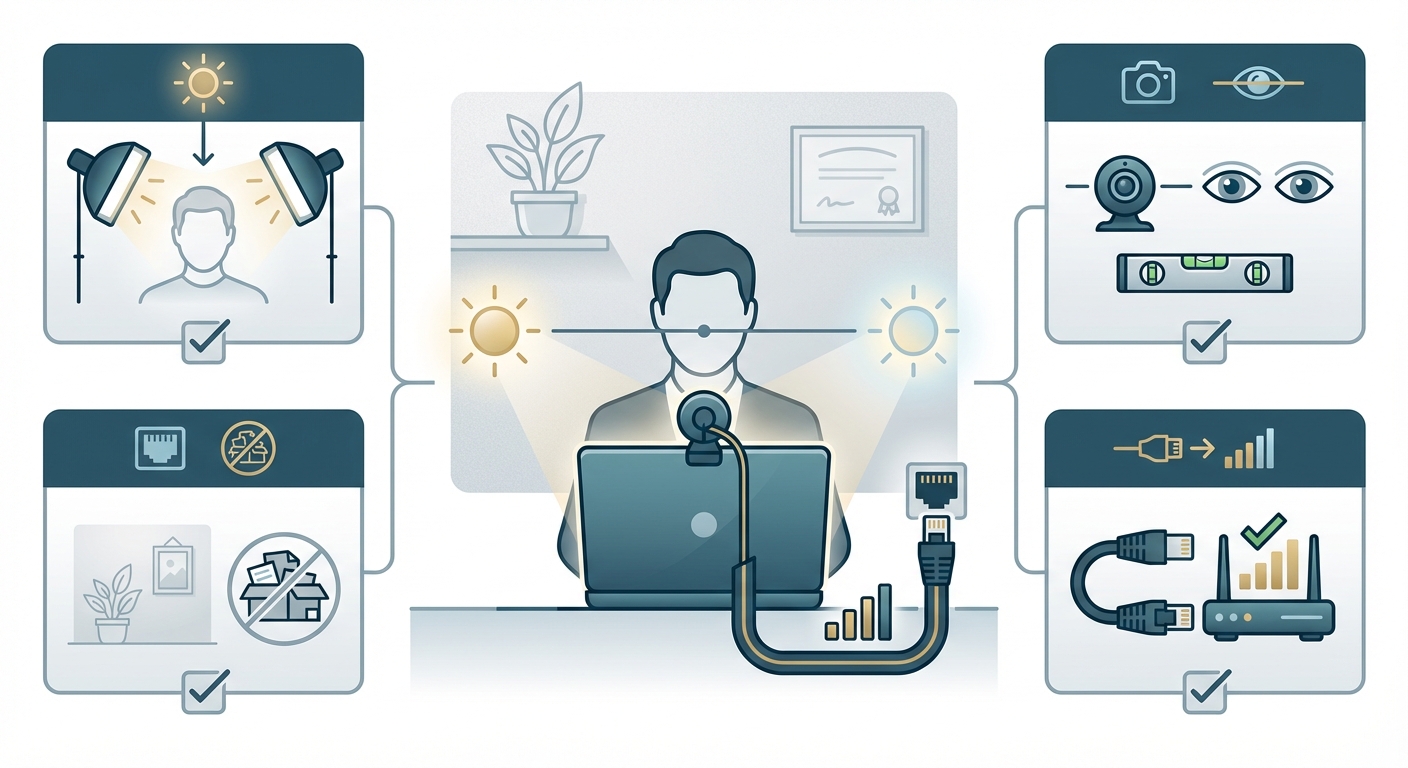
Visual breakdown of an ideal remote interview setup, highlighting lighting placement, camera angle at eye level, neutral background, and wired internet connection
The Art of Over-Communication
In an office, you can nod to show you understand. On Zoom, that doesn't always translate. You need to verbally confirm things more often. Pause longer after the interviewer speaks to account for lag. It feels awkward at first. But it prevents interruptions.
Here is a quick comparison of how to shift your behavior:
| Feature | In-Person Interview | Remote Interview |
|---|---|---|
| Eye Contact | Look at their eyes | Look at the camera lens |
| Small Talk | casual chat entering the room | Brief, structured check-in at start |
| Notes | Notebook on table | Notepad near keyboard (don't type!) |
| Ending | Handshake and walk out | Wave and wait for the call to cut |
Where should you actually look?
Niche job boards and specific remote-first aggregators yield higher response rates than general search engines because the intent is already aligned.
Beyond the Big Boards
If you only use LinkedIn and Glassdoor, you are fighting everyone else. To find remote jobs that are less competitive, you need to go where the remote-first companies hang out. Look at sites like We Work Remotely or specialized slack communities.
Also, check the career pages of companies that have always been remote. Do not just wait for a listing. If you like a company, send a cold email. Pitch a project. Show them you can create value without being asked. That is the ultimate remote skill.
For a deep dive on search strategies, Indeed offers a solid guide on the mechanics of finding a remote job, which covers keyword filtering effectively. But remember to tailor your resume every single time. You can use our Resume Builder to quickly create different versions of your CV for different types of remote roles.
The "Remote" Filter Trap
Be careful. Scammers love the "work from home" keyword. If a job promises huge money for zero experience, run. Legitimate remote jobs usually have rigorous interview processes. They want to test your skills. If it seems too easy, it is probably a data harvesting scam.
Key Takeaways
- Rewrite for results: Focus your resume on outcomes and self-management, not just daily tasks.
- Master the tools: Explicitly list remote collaboration software (Slack, Zoom, Jira) in your skills section.
- Audit your background: ensure your video interview setup looks professional and sounds clear.
- Write well: Your emails and cover letters are writing samples. Make them perfect.
- Look in niches: Don't rely solely on massive job boards to find remote jobs; use specialized platforms.
Standing out isn't about being the loudest. It's about being the most reliable. Show them you can handle the freedom of remote work, and you will get the job. If you need help polishing that application, OneTwo Resume is here to help you build a profile that gets noticed.