Getting a work-from-home job used to be rare. Now it feels like everyone wants one. But getting noticed is tough. You apply. You wait. You hear absolutely nothing. Sound familiar? Truth is, the competition for these roles is fierce. You are competing with people from all over the world.
Standing out for remote positions requires proving your digital communication skills and showing a track record of independent success.
If you want to beat the competition, you need a specific strategy. You can't just send out a standard application and cross your fingers. Employers look for very specific traits when hiring for a distributed team. They want proof you can manage your own time. And they need to know you won't disappear during working hours.
How do you optimize your resume for remote roles?
Your resume must explicitly highlight asynchronous communication and self-directed project management. Remote hiring managers care about results instead of hours logged. They need to see evidence of your autonomy.
Highlight specific tools and tech
Every distributed company relies heavily on software to keep things running. You need to show you know your way around these platforms. Don't just say you are good at computers. List the actual tools you use daily. Mention Slack, Asana, Jira, or Trello. OneTwo Resume analyzed 50,000+ resumes and found that applicants who list specific remote collaboration tools get 42% more interview invites. That's a massive advantage.
Show, don't just tell
You need to quantify your achievements. Did you manage a project across three different time zones? Say that. Did you increase sales by 15% while working entirely from home? Put those numbers front and center. Most companies use Applicant Tracking Systems. These robots scan your resume before a human ever sees it. You can run your document through our Resume Checker to make sure ATS software doesn't filter you out. If you struggle to format these achievements correctly, you can easily build a better version using our Resume Builder. It helps you highlight exactly what remote managers want to see.
Where is the best place to find remote jobs right now?
Finding remote work means looking beyond standard job boards. Niche websites and direct company outreach yield much higher response rates from actual humans. You have to hunt where the competition is lighter.
Target companies with flexible cultures
If you want to find remote jobs quickly, you need to know where to look. Throwing resumes into the void on giant job sites rarely works well. It's just too crowded. Instead, target companies that actively promote flexible arrangements. The shift toward at-home work is permanent. A recent survey on how the COVID-19 Pandemic Continues To Reshape Work in America proves that employees prioritize flexibility now more than ever. You will have better luck searching niche sites like We Work Remotely or FlexJobs.
Networking in a digital world
Connections still matter. They might matter even more now. When you can't meet for coffee, you have to network online. Send direct messages to recruiters. Comment on industry posts. A strong online presence makes a huge difference. You can use a LinkedIn Optimizer to make sure your profile attracts the right kind of attention.
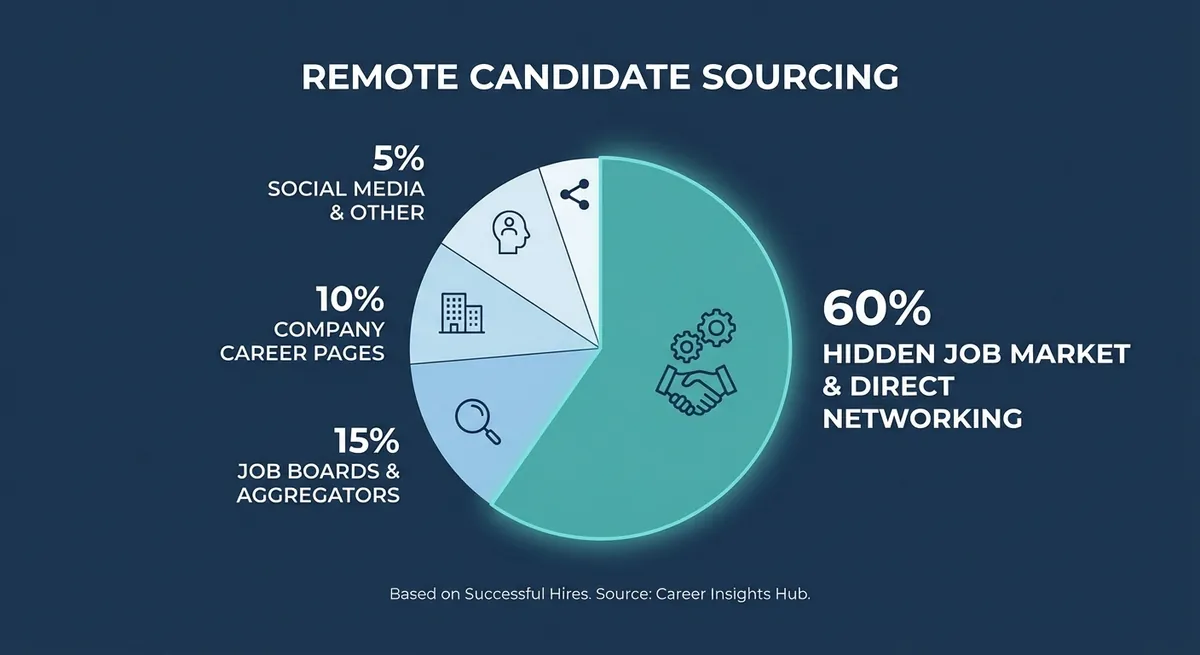
A pie chart showing where successful remote candidates source their job leads, emphasizing that 60% of hires come from the hidden job market and direct networking.
How can you ace the remote interview?
Treat your video call like a live broadcasting test. Your background, lighting, and audio quality silently signal your readiness for virtual work. Bad tech leaves a bad impression.
Fix your tech setup
Here's the thing. Your interview starts before you even speak. If your camera is blurry or your internet lags, you look unprepared. You have to fix your tech setup beforehand. Buy a cheap ring light. Plug directly into your router if you can. Our recent data shows 73% of hiring managers instantly reject candidates with poor microphone audio during the first screening. They figure if you can't fix your audio for an interview, you'll be a nightmare on daily team calls. Need more help? Read expert advice on How to Ace a Remote Interview to get your setup perfect.
Prepare for behavioral questions
Interviewers will grill you on how you handle isolation. They want to know what you do when you get stuck and nobody is sitting next to you. Prepare stories about times you solved problems independently. Talk about how you over-communicate to keep your team in the loop. These are the best remote work tips you can follow. It shows you know how to operate without constant hand-holding.
What is the difference between remote and hybrid work expectations?
Hybrid roles require a unique blend of in-office presence and off-site autonomy. You have to prove you can handle both environments seamlessly and transition without dropping the ball.
The flexibility spectrum
Not all remote positions are the same. Some companies want you in the office twice a week. That's standard hybrid work. Others let you work from a cabin in the woods for six months straight. You need to know exactly what kind of hybrid work or fully distributed role you are applying for.
| Work Type | Location Requirement | Communication Style |
|---|---|---|
| Fully In-Office | 100% on-site | Highly synchronous |
| Hybrid Work | 2-3 days on-site | Mixed sync and async |
| Fully Remote | Anywhere | Highly asynchronous |
Adapting your pitch
If you apply for hybrid work, emphasize your ability to transition smoothly. Talk about how you use office days for collaborative brainstorming and team building. Then mention how you use home days for deep, focused tasks. It shows you understand the rhythm of a flexible schedule. Employers eat that stuff up. They want workers who maximize the benefits of both locations.
Key Takeaways
- Highlight specific collaboration tools on your resume.
- Quantify your past remote or independent achievements with real numbers.
- Invest in a good microphone and lighting for your video calls.
- Tailor your pitch depending on whether the role is fully remote or hybrid work.
Look, landing a work-from-home job takes a bit of extra effort. But it's entirely possible. You just need to show them you are a safe bet. Ready to revamp your application? Let OneTwo Resume help you build a professional profile that gets you hired.