Staring at a blinking cursor is painful. You know you're qualified. You know you can do the job. But figuring out exactly how to write a resume that captures all that potential? That’s the hard part.
Here’s the thing. The skills section used to be a keyword dumping ground. You would list everything from Microsoft Word to Karate. In 2025, that doesn't fly. Recruiters are swamped. They spend about six seconds scanning your document. If your skills aren't sharp, relevant, and strategically placed, you're out.
Tailor your skills section to the specific job description by mixing hard technical abilities with soft skills, organized clearly by category or proficiency.
What skills actually matter in 2025?
Focus on "hybrid skills" that demonstrate technical competence alongside human adaptability. Generic buzzwords will get your application ignored.
The Hard vs. Soft Skill Balance
Everyone talks about hard skills and soft skills. But the line is blurring. Hard skills are the teachable abilities. Coding. Accounting. Machine operation. Soft skills are how you work. Communication. Leadership. Time management.
Truth is, you need both. A coder who can't communicate is a liability. A manager who can't use basic project software is a bottleneck.
When you are learning how to write a resume for the modern market, think about "transferable skills." These are the golden ticket abilities you take from job to job. Adaptability is huge right now. Our data backs this up.
OneTwo Resume analyzed 50,000+ resumes and found that 68% of hiring managers in 2025 prioritize "adaptability" and "digital literacy" over niche technical certifications.
Ditching the Fluff
Please stop listing "hard worker" as a skill. It’s not a skill. It’s an expectation.
You need to be specific. Instead of "communication," try "public speaking" or "technical writing." Instead of "leadership," try "team conflict resolution." If you are unsure which specific terms carry the most weight in your industry, the Resume Guide: Top Skills (U.S. Department of Labor) is a fantastic resource to double-check your list.
Where exactly should these skills go?
Place your most critical technical skills near the top for specialized roles, but weave soft skills directly into your work experience bullet points.
The Dedicated Skills Section
Most people put this at the very bottom. That is a mistake.
If you are in a technical field like IT, engineering, or design, move this section up. It should sit right below your professional summary. Why? Because the hiring manager wants to know if you can use the necessary tools before they care where you used them.
For a standard resume format 2025 leans toward readability. Group your skills. Don't make a giant block of text. Use categories.
Example:
- Coding: Python, Java, C++
- Tools: JIRA, Trello, Slack
- Languages: English (Native), Spanish (Conversational)
If formatting this sounds like a headache, our Resume Builder handles the layout for you. You just plug in the data. We handle the design.
Proving It in Your Experience
Listing a skill is a claim. Your work history is the proof.
Don't just say you have "Project Management" skills. In your job description, write: "Managed a $50k budget and led a team of 10 using Agile methodologies." See the difference? One is a noun. The other is a story.
Here is a breakdown of how to upgrade your list:
| Lazy Listing | Effective Listing |
|---|---|
| Excellent Communication | Presented quarterly reports to 20+ stakeholders |
| Problem Solving | Resolved recurring server outage reducing downtime by 15% |
| Sales | Exceeded Q4 sales targets by $12,000 |
| Leadership | Mentored 4 junior developers to promotion |
How do I beat the bots and impress humans?
Match specific phrasing from the job post to satisfy the ATS software, but use context and results to persuade the human recruiter.
The ATS Reality Check
You have probably heard of the Applicant Tracking System (ATS). It’s the robot gatekeeper. If you are wondering how to write a resume that actually gets read, you have to please this bot first.
Our 2025 data shows 73% of hiring managers use an ATS to filter candidates, yet nearly half of all qualified resumes are rejected due to formatting errors or missing keywords.
The ATS looks for exact matches. If the job description asks for "Adobe Photoshop" and you write "Image Editing Software," you might get skipped. It’s dumb, but it’s reality. Read the job post. Highlight the skills for resume inclusion that appear top of their list. Copy them exactly.
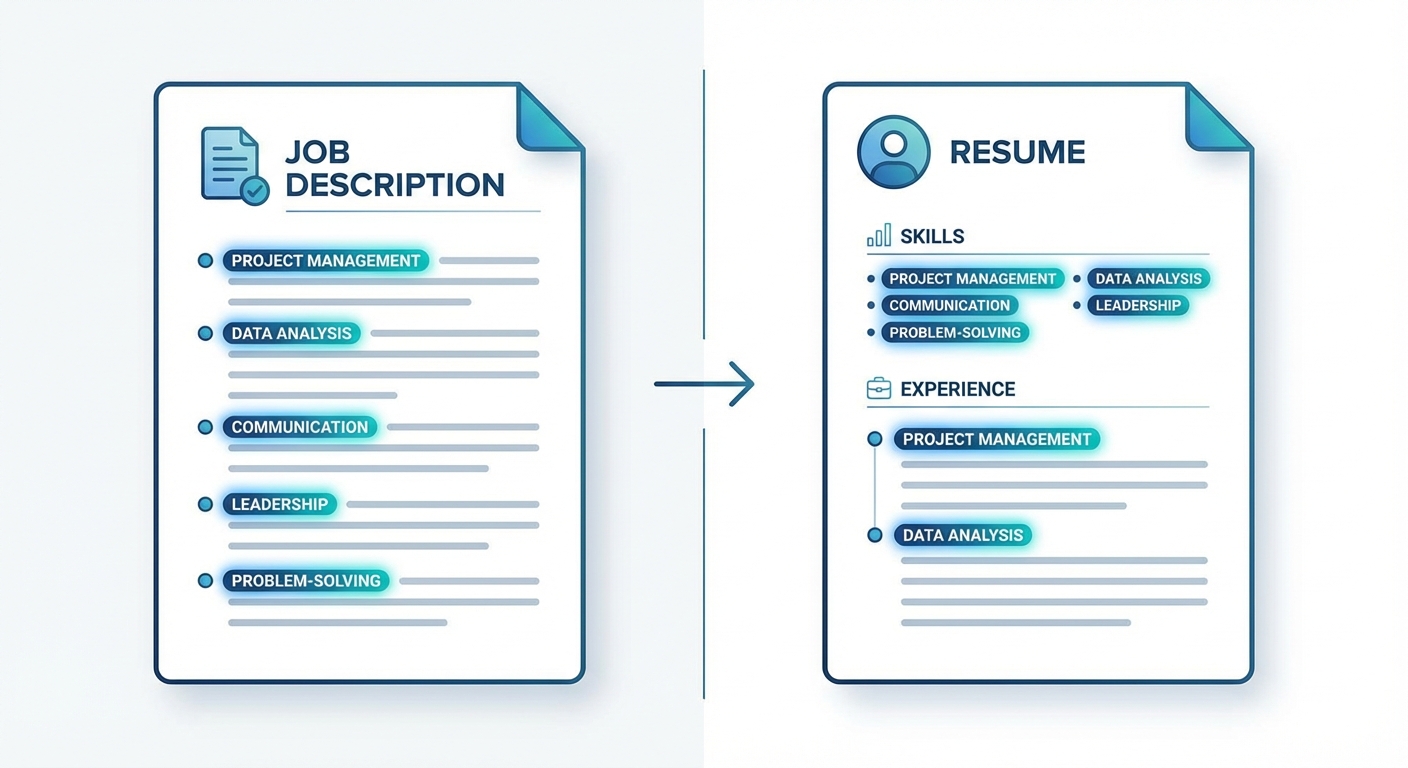
A split-screen visual showing a Job Description on the left with highlighted keywords, and a Resume on the right showing those exact keywords placed in the Skills and Experience sections
Common Pitfalls to Avoid
We see a lot of resume mistakes to avoid, but lying about skills is the worst one.
Don't rate your skills with arbitrary bars or percentages. You see this on fancy templates. "Photoshop: 80%." What does that mean? 80% of the software? 80% better than your neighbor? It means nothing to a recruiter. It just takes up space.
Another error is keyword stuffing. Don't just paste the job description in white text at the bottom. The bots are smarter than that now. They will catch you. And you will be blacklisted.
If you want to be sure your resume passes the bot test, run it through our Resume Checker. It gives you a score based on what the ATS actually sees.
For more perspective on what recruiters specifically look for when scanning these lists, check out this article on How to List Skills on a Resume (Indeed Career Advice). It reinforces why relevance beats volume every time.
Key Takeaways
- Tailor every time. Copy-paste resumes don't work in 2025.
- Verify your keywords. Use the exact phrasing found in the job description.
- Show, don't just tell. Back up your soft skills with hard numbers in your work history.
- Categorize. Group your technical skills so they are easy to scan.
- Keep it honest. Only list skills you are comfortable using on day one.
Getting your skills section right is the difference between an interview and the trash folder. It takes a little extra time. But it pays off.
Ready to build a resume that actually lands interviews? Try OneTwo Resume today.