Volunteer work can be incredibly valuable in showcasing skills and experiences when you're transitioning to a new career at 40.
Making a career switch can be daunting, especially when you hit the big 4-0. You're not just changing jobs; you're possibly shifting entire industries. Volunteer experiences can play a pivotal role in this transition by highlighting transferable skills that hiring managers seek. Here’s how you can make the most of your volunteer work in your journey towards a new career at 40.
How Can Volunteer Work Enhance My Career Narrative?
Highlighting your volunteer experience can fill gaps in your resume and showcase your dedication to growth and community.
Volunteer positions often allow you to develop skills that are highly marketable. Here’s how to make your volunteer work count:
1. Build a Compelling Story
- Connect your volunteer work to the career you're pursuing. For instance, if you're switching from a corporate job to non-profit management, emphasize skills such as project management and teamwork gained through volunteering.
- Include anecdotes about your experiences that demonstrate your passion for the new field. Stories resonate more than bullet points on a resume.
2. Identify Transferable Skills
- Figure out what skills you developed while volunteering. These could include:
- Leadership
- Communication
- Problem-solving
- Event planning
- List these skills and map them to the requirements of the jobs you are applying for.
3. Update Your Resume and LinkedIn
- When you're applying for jobs, include your volunteer work in the relevant sections of your resume. Don’t forget to describe the impact you made, such as “increased youth engagement by 30% through program development.”
- Use your LinkedIn profile to promote your volunteer experience. Share posts about your activities, highlighting your achievements and skills.
How Do Hiring Managers View Volunteer Experience?
Many employers look favorably upon volunteer work, considering it a sign of well-roundedness and commitment.
The perception of volunteer work is steadily improving. Here are some insights:
1. Positive Employer Trends
- According to our recent data, 73% of hiring managers view volunteer experience as relevant work history. They see it as a demonstration of initiative and ability to take on responsibilities.
- Companies increasingly seek employees who understand community impact, especially as corporate social responsibility continues to grow.
2. Volunteering in Action
- Successful transitions often involve networking in your target industry. Volunteering offers unique opportunities to meet professionals and learn from them.
- For example, if you're aiming for a role in environmental science, volunteer with local conservation groups. Network while you work.
What Should I Communicate About My Volunteer Roles?
Clearly articulating your volunteer roles can reveal much about your readiness for a new career at 40.
Clearly detailing your responsibilities can make your volunteer experiences stand out on your resume and in interviews:
1. Quantifiable Achievements
- Show measurable outcomes of your work, such as:
- Managed a fundraising campaign that raised $10,000 for a local charity.
- Led a team of 15 volunteers to complete a community building project in three months.
- Use these statistics to bolster applications.
2. Stand Out on Your Resume
- Position your volunteer experience like job experience. Format it clearly, and don’t shy away from using action-oriented language.
- Consider this section as an essential part of your professional journey, not just an afterthought.
3. Tailor Every Application
- Always customize your resume or cover letter to the job you're applying for. Incorporate relevant skills from your volunteer work that match the job description.
| Volunteer Project | Skill Developed | Transferable Application |
|---|---|---|
| Fundraising Event | Fundraising Management | Budgeting and Financial Skills |
| Community Clean-up Initiative | Project Management | Team Coordination |
| Mentorship Program | Leadership | Training and Development |
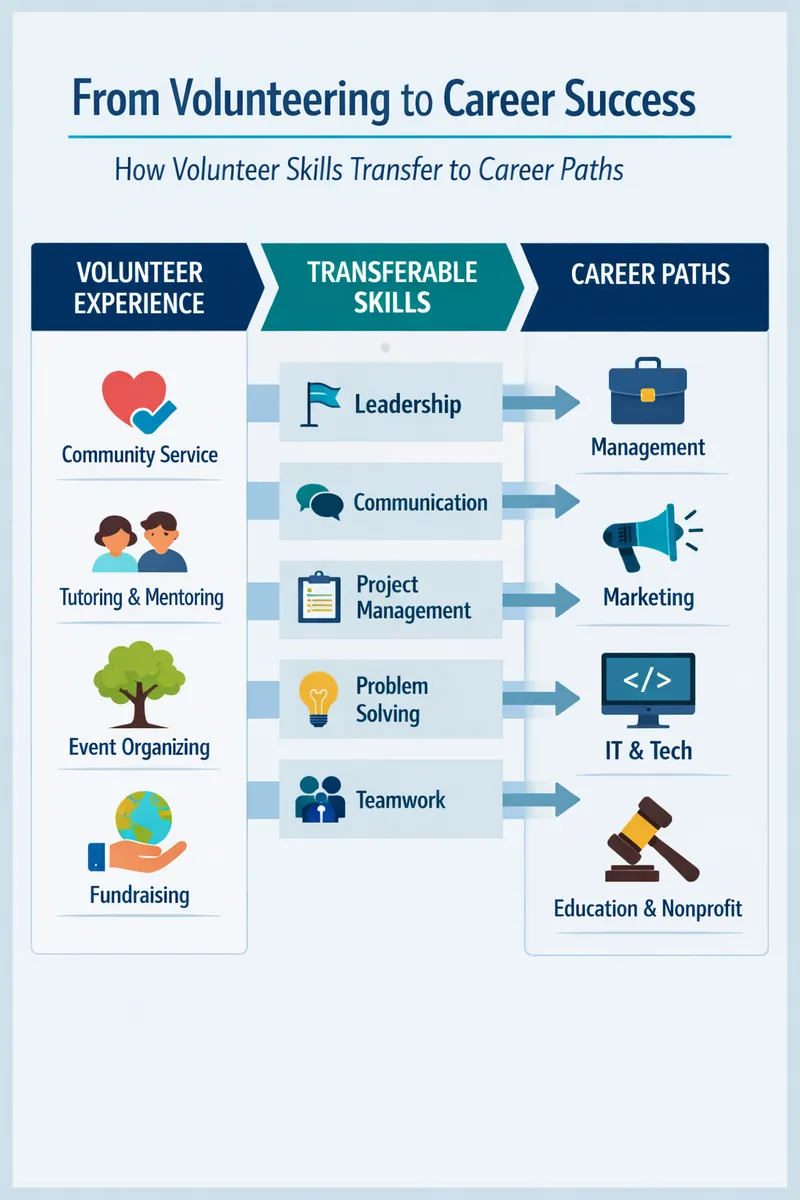
A visual representation showing how volunteer experience translates into transferable skills for different career paths.
In your career change journey, it's crucial to present your volunteer experience as a strategic asset. Remember, your story and passion can resonate much louder than a generic resume.
For more tips on how to optimize your resume, check our tools for building or reviewing resumes. Resources like the Bureau of Labor Statistics can also help guide your career decisions.
Key Takeaways
- Volunteer experiences can significantly enhance your resume during your career change.
- Identify and communicate transferable skills developed through volunteering.
- Tailor your applications to highlight relevant volunteer work and how it prepares you for the new role.
When you're thinking about a new career at 40, remember that your journey is unique. Take stock of your experiences and be proud of the skills you've built. They matter. As you navigate this transition, consider using OneTwo Resume's tools to create a standout resume or check it for ATS compatibility. You've got this!