Finding a work-from-home role feels a lot like finding a needle in a haystack. Except the haystack is on fire. And the needle might actually be a scammer trying to steal your identity.
It’s noisy out there. Everyone wants the freedom to work from anywhere. That means competition is fierce. But it’s not impossible. You just need a better strategy than hitting "Easy Apply" on LinkedIn five hundred times a day.
Here’s the thing. Most people search for remote work entirely wrong. They treat it like a standard job search. But remote hiring is a different beast entirely.
To find legitimate remote work, skip the mass aggregators and focus your energy on niche remote-specific job boards and targeted networking within your industry.
Where are the real opportunities hiding?
The best remote roles often don't make it to the main feed of major aggregators because companies want to avoid thousands of unqualified applicants.
If you type "find remote jobs" into a giant search engine, you’re going to get overwhelmed. You will see thousands of listings. Many are old. Some are fake. Others have 2,000 applicants already.
Stop relying on the giants
Big job boards are fine for research. But they are terrible for application conversion rates. It’s a numbers game you will likely lose. Instead, you need to go where the remote-first companies actually live. Sites like We Work Remotely, FlexJobs, or Remote OK filter out the noise. They cost money for employers to post. That is a good thing. It means the company is serious. It filters out the spam.
And don't ignore the "hybrid work" filter. Sometimes a company lists a role as hybrid but is open to fully remote for the right candidate. It’s a loophole. Use it.
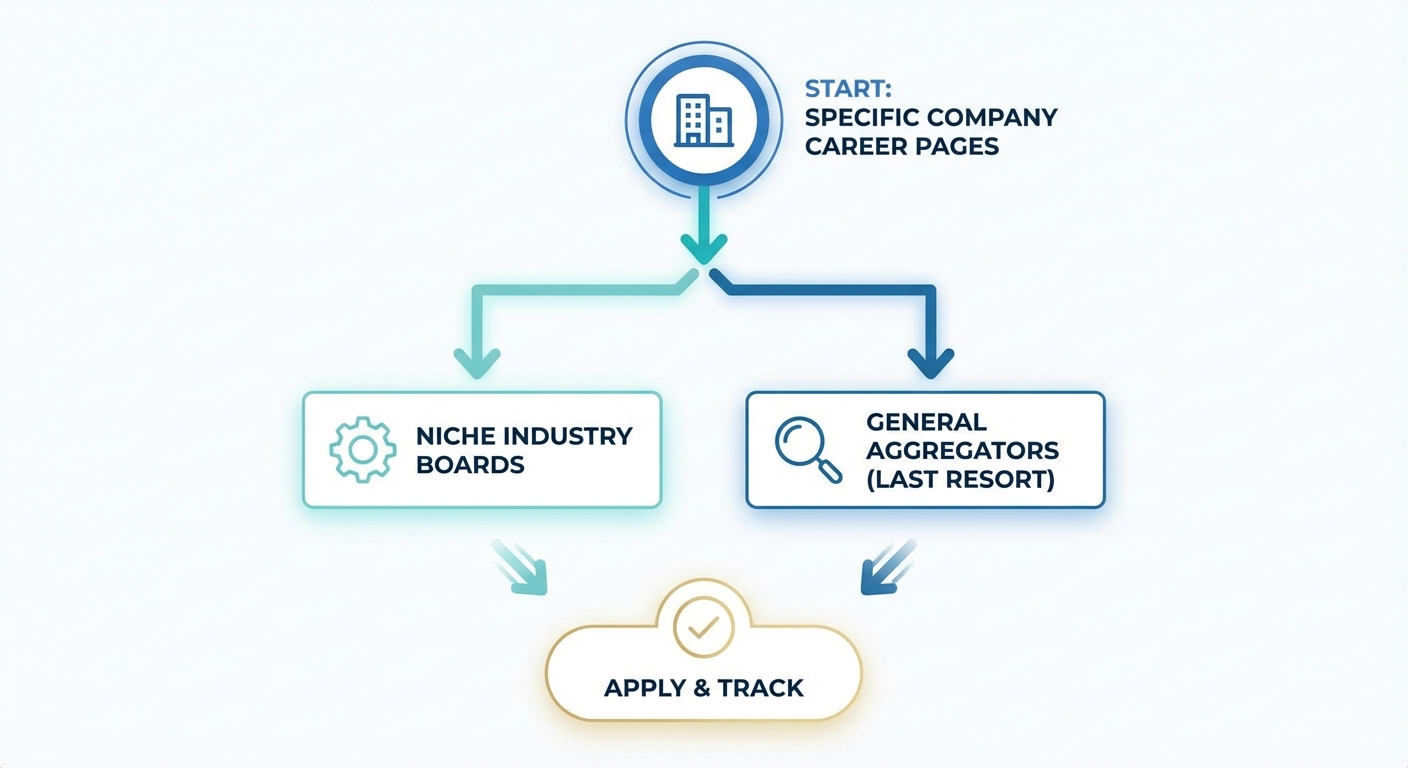
A decision tree flowchart showing 'Where to search' starting with specific company career pages, moving to niche boards, and ending with general aggregators as a last resort
Verify everything
Scams are getting sophisticated. I mean really sophisticated. They will interview you. They will send you paperwork. Then they will ask you to buy equipment from a specific vendor. That’s the trap.
Check the Federal Trade Commission: Job Scams Advice to stay safe. If they want to send you a check for a home office setup before you’ve started, run. Legitimate companies send you the equipment. Or they reimburse you in your first paycheck. They never ask you to wire money.
Our recent data shows 73% of hiring managers at remote companies now check for digital footprints before scheduling an interview. If you don't exist online, you look risky. So clean up your LinkedIn profile.
Does your resume prove you can work alone?
Remote hiring managers prioritize asynchronous communication skills and self-discipline over almost everything else on your CV.
When you work from home, nobody is standing over your shoulder. That scares some bosses. They need to know you can manage your own time. Your resume needs to scream autonomy.
The skills that actually matter
Stop listing "Microsoft Word" as a skill. It’s 2024. Instead, list tools that prove you can collaborate digitally. Slack. Zoom. Jira. Asana. Trello.
And mention your soft skills. But be specific. Don't just say "good communicator." Say "experienced in asynchronous communication" or "proficient in managing cross-timezone projects." These are the magic words. They tell the recruiter you know how remote work actually happens.
OneTwo Resume analyzed 50,000+ resumes and found that candidates who explicitly mentioned "time management" or "remote collaboration" in their summary section received 40% more callbacks for remote roles.
Beating the bots
If you want to find remote jobs that pay well, you have to get past the Applicant Tracking System (ATS). These bots are looking for specific keywords. If you are applying for a remote role, the JD (job description) is likely full of remote-specific terms.
Before you send that PDF, run it through our Resume Checker. It will score your resume against the job description and tell you if you’re missing those critical keywords. It takes two minutes. It saves you weeks of silence.
| Feature | Traditional Resume | Remote-Optimized Resume |
|---|---|---|
| Communication | "Excellent verbal skills" | "Strong written/async communication" |
| Tools | Office, Excel, PowerPoint | Slack, Zoom, Notion, Trello |
| Work Style | "Team player" | "Autonomous contributor, self-starter" |
| Results | "Managed a team" | "Led distributed team across 3 time zones" |
How do you nail the remote interview?
Your ability to troubleshoot your own audio and video during an interview is the first practical test of your technical competence.
Congratulations. You got the interview. Now you have to perform. But a remote interview is awkward. You can’t shake hands. You can’t read body language as easily. And if your wifi cuts out, you’re done.
The tech check is the test
Here is a secret. The interviewer is judging your setup. If your camera is blurry or your microphone echoes, they assume you will be difficult to work with. It sounds harsh. But it is true.
Fix your lighting. Put a lamp behind your laptop. Buy a decent microphone or use good headphones. Test your internet speed. This isn't just about vanity. It is about proving you are ready to work.
Over-communicate
In a video call, silence is heavy. It feels longer than it is. When you answer questions, be concise. But also check in. Ask, "Did that answer your question?" or "Do you want me to elaborate on that?"
Look at the camera, not the screen. It feels weird. But to the other person, it looks like eye contact. It builds trust.
Also, have your stories ready. Use our Resume Builder to organize your work history into clear accomplishments. When you know your story cold, you don't have to look down at your notes. You can stay engaged.
For more tips on the interview process, check out the Indeed Career Guide: How to Find Remote Jobs. They break down the common interview questions you should expect.
Key Takeaways
- Go Niche: Skip the massive boards. Use specific sites like We Work Remotely or verify "hybrid" roles on company pages.
- Optimize for Autonomy: Your resume must prove you can work without supervision. Highlight async communication tools.
- Test Your Tech: Your interview setup is a practical exam. Good audio and lighting matter more than you think.
- Watch for Scams: If they send a check for equipment, it's a scam. Always.
Finding a remote job takes patience. It takes a different toolkit. But once you land one, the freedom is worth the effort. Stick with it. And let us help you build the resume that gets you there.