The dream is simple. You want to ditch the commute. You want to drink your own coffee. You want to work in sweatpants. But finding a genuine work-from-home role feels like searching for a needle in a haystack of scams and low-ball offers.
It’s frustrating. You spend hours applying on major job boards only to get ghosted. Or worse, you get an immediate offer from a "recruiter" who wants your bank details over Telegram.
Look, legitimate remote work is out there. Companies are hiring. But the way you find these roles is totally different from the traditional job hunt.
Focus your search on niche remote-specific job boards and verify every listing on the company's official career page before you send any personal data.
If you want a head start, our guide to the best companies for remote work lists employers that actually hire distributed teams — apply through their own career pages and you skip most of the scam surface entirely.
Where should you start looking for legitimate remote roles?
Stop relying solely on massive aggregators like Indeed or LinkedIn Easy Apply and start using curated boards that charge employers to post listings.
The Problem with Major Aggregators
Here is the thing about huge job sites. They are full of noise. Anyone can post there. That includes scammers. It includes bots. It includes agencies farming for resumes.
When you type "remote" into a general search bar, you are competing with the entire world. A single posting might get 2,000 applicants in an hour. Your odds are terrible. You need to go where the serious employers are.
Niche Boards are Safer
Legitimate companies pay money to find good talent. Scammers usually don't. That is why paid job boards or curated lists are your best friends. Sites like We Work Remotely, FlexJobs, or Remote.co vet their listings. They filter out the junk.
We recommend checking Indeed Career Advice: How To Find a Remote Job for some baseline strategies. But remember that niche boards are where the high-quality signal is.
Target "Remote-First" Companies Directly
Don't wait for a job opening. Make a list of companies that don't have offices. These organizations know how to manage distributed teams. They aren't figuring it out as they go.
Check their "Careers" pages weekly. Even if they aren't hiring right now, many have talent pools you can join. Truth is, this proactive approach works better than firing off generic applications.
How can you identify a remote work scam quickly?
If a recruiter offers you a job without a video interview or asks you to buy equipment with a check they send you, it is 100% a scam.
The Red Flags
Scammers prey on desperation. They know you want the job. So they make it easy. Too easy.
If you get an email saying you are hired based on your resume alone, delete it. Real companies need to talk to you. They need to see if you fit.
Also, watch out for communication on encrypted apps. If they ask to switch to WhatsApp, Telegram, or Signal immediately, that is a bad sign. Professional recruiters use company email addresses or LinkedIn Recruiter. They don't text you from a generic Gmail account at 11 PM.
According to the Federal Trade Commission: Job Scams, fake check scams are rampant. They send you a check for a "home office." You deposit it. You buy equipment from their "vendor." The check bounces. You are out the money.
The Data on Scams
We looked into this. and found that job listings containing the phrase "instant hire" or "no experience needed" were 4x more likely to be flagged as fraudulent than standard listings.
Legitimate jobs have requirements. They have hurdles. If there are no hurdles, there is no job.
| Feature | Legitimate Remote Job | Job Scam |
|---|---|---|
| Interview | Video calls, multiple rounds | Chat-only or instant offer |
| @company-name.com | @gmail, @yahoo, @hotmail | |
| Equipment | Sent by company or stipend | You buy, they "reimburse" |
| Urgency | Standard hiring timeline | Pressure to act immediately |
| Pay Info | Discussed after screening | High salary listed for entry-level |
How does a remote interview differ from an in-person one?
You must over-communicate your autonomy and tech-savviness because the hiring manager cannot physically see you working at your desk.
Tech Check is Non-Negotiable
It sounds obvious. But people still mess this up. Your internet cannot cut out. Your microphone cannot echo.
If you can't manage a Zoom call, they assume you can't manage a remote workflow. Test everything 10 minutes before. Not 2 minutes before.
Showing Soft Skills Through a Screen
You have to work harder to build rapport. Look at the camera, not the screen. Nod more. Use verbal affirmations.
view candidates who keep their camera on and maintain eye contact as "more trustworthy" and "better communicators."
You also need to demonstrate you can work alone. Share stories about how you managed your time. Talk about how you communicate updates asynchronously. These are vital remote work tips that separate the pros from the amateurs.
Before your interview, run your CV through our Resume Checker. It helps ensure your document highlights the specific remote-friendly skills the ATS is scanning for.
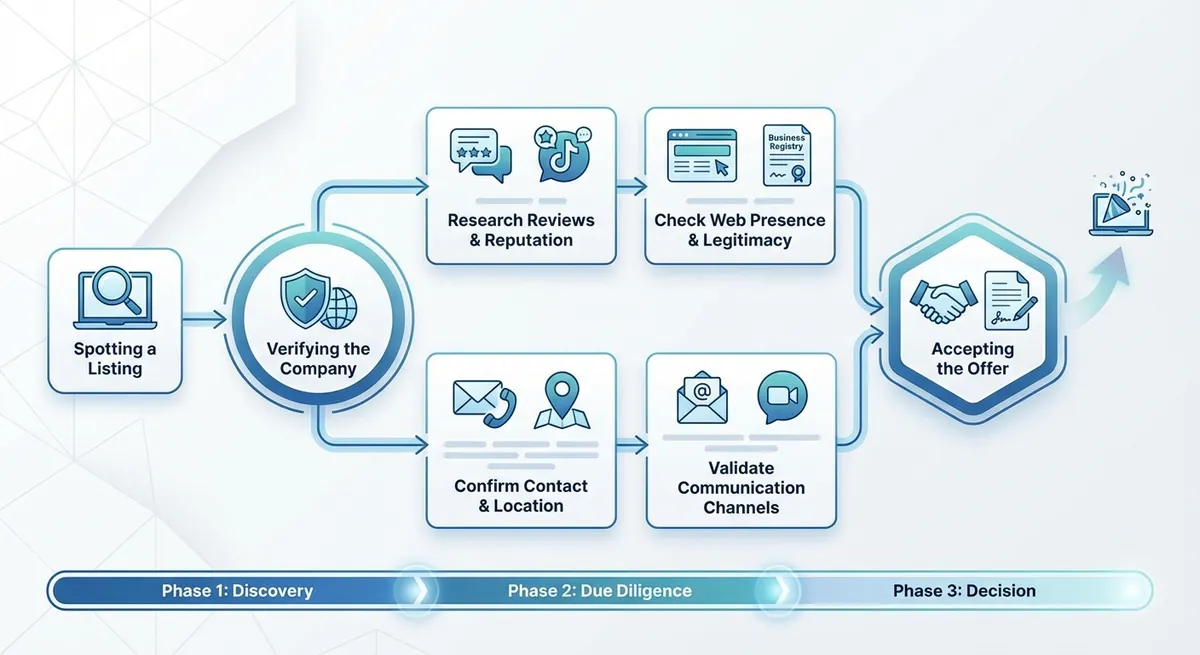
Visual flow chart showing the 'Remote Job Vetting Process' starting from spotting a listing to verifying the company to accepting the offer
Should you consider hybrid work instead of fully remote?
Hybrid roles often have significantly less competition than fully remote jobs while still offering the flexibility many professionals crave.
The Middle Ground
Everyone wants fully remote. That means the competition is fierce. But hybrid work is different.
Many candidates refuse to go into an office at all. This creates an opportunity for you. If you are willing to commute one or two days a week, your applicant pool shrinks dramatically. You might be fighting 50 people instead of 5,000.
Networking Benefits
There is also a career advantage. Hybrid work allows for face time. You meet bosses in the hallway. You grab lunch with colleagues. These interactions build relationships that are harder to forge over Slack.
If you are early in your career or switching industries, hybrid work might actually accelerate your growth faster than a fully isolated role.
Optimizing Your Profile
Whether you target fully remote or hybrid, your digital presence matters. Your LinkedIn profile is your new first impression. If it’s dusty, you’re invisible.
You can use our LinkedIn Optimizer to revamp your profile. It helps you align your headlines and summaries with the keywords recruiters are actually searching for.
Key Takeaways
- Verify everything. If a company doesn't have a digital footprint or uses generic emails, walk away.
- Niche down. Use specific boards like We Work Remotely rather than blasting resumes on huge aggregators.
- Tech matters. Your interview setup is a direct reflection of your ability to handle remote work.
- Consider hybrid. The hybrid work market is less saturated and offers a good balance of freedom and connection.
- Don't pay. Never pay for equipment, training, or "software" to get a job.
Finding a remote job takes more front-end work than a traditional search. You have to filter more. You have to vet more. But once you land that role and close your laptop at 5 PM with zero commute ahead of you, you'll know it was worth it.
Ready to get your application materials in top shape? Build a resume that beats the bots with OneTwo Resume.