Sitting across from a hiring manager can be incredibly nerve-wracking. It gets even scarier when they glance down at your resume, look back up, and ask the inevitable question. "So, why the sudden career change?"
Don't panic. You aren't the only one making a big shift.
Starting a new career at 40 is incredibly common today. Or 30. Or 50. But you need a rock-solid answer prepared. Hiring managers just want to know you're committed. They want reassurance that you know what you're doing.
The secret to explaining a career change is to focus on your future goals, highlight transferable skills, and prove your past makes you qualified.
Here is exactly how you can craft a narrative that turns your non-traditional background into your biggest selling point.
Why did you decide to change careers?
Frame your departure from your old field as a run toward a new passion, not a frantic escape from a bad situation.
Keep it entirely positive
Truth is, nobody wants to hire a complainer. Your old boss might have been an absolute nightmare. The daily hours might have crushed your soul entirely. Keep that strictly to yourself. You need to focus on what excites you about the new field. A career transition should look like a highly deliberate choice.
And it really works. Our recent data shows 73% of hiring managers view career changers favorably if they can articulate a clear passion for the new industry. They don't mind the pivot. They just want to know you actually care about the work.
It helps to consult the experts when framing this. The U.S. Department of Labor CareerOneStop: Resources for Career Changers offers fantastic, free guidance on finding that positive spin.
Tell a logical story
Your resume might look completely disjointed to a total stranger. You have to connect the dots for them.
Did you realize you loved analyzing data while doing monthly marketing reports? Say that loud and clear. Make your career pivot sound like a natural evolution of your interests. Short sentences help here. Be direct. "I loved X, which naturally led me to Y." That makes perfect sense to people. It stops them from trying to guess your underlying motives.
How do your past skills translate to this role?
Your past experience is a massive advantage if you take the time to map your old responsibilities directly to the new job requirements.
Master your transferable skills
Look, you're not starting from scratch. You bring a lot of value to the table. Some skills simply apply everywhere. Think about things like:
- Complex project management and budgeting.
- Client communication and conflict de-escalation.
- Cross-functional team leadership.
Starting a new career at 40 means you have two decades of professional polish. And frankly, younger candidates don't have that yet. You know how to navigate complex office politics. You know how to hit hard deadlines without needing someone to hold your hand.
OneTwo Resume analyzed 50,000+ resumes and found that career changers who explicitly list "transferable skills" get 42% more interview callbacks. If you're unsure how your current document stacks up, run it through our Resume Checker to see if those vital skills shine through clearly.
Prove it with hard data
Don't just claim you're highly organized. Give them the numbers.
Talk about the $500,000 departmental budget you managed. Mention the remote team of twelve you led to a record quarter. Hard data builds instant trust. It proves you know how to drive actual results in a business environment.
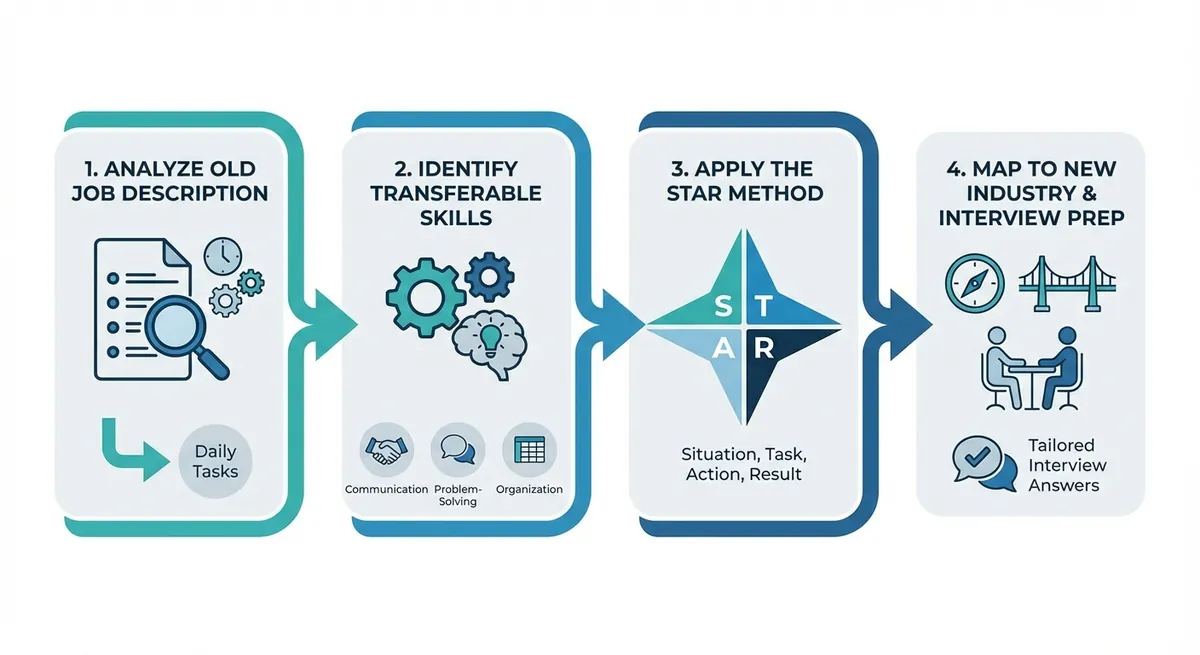
A step-by-step flowchart showing how to map daily tasks from an old job description to a completely new industry using the STAR method for interviews
Are you ready to start over in a new industry?
Openly acknowledge the steep learning curve, but immediately back it up with a specific example of a time you rapidly mastered a complex new subject.
Address the elephant in the room
Hiring managers worry you will get frustrated. They secretly fear you'll bolt when the work gets tough. Tackle this concern head-on. Acknowledge that you have a whole lot to learn right now. Then show them you're an absolute sponge.
Have you taken late-night online courses? Mention them. Did you earn a completely new certification over the weekend? Bring it up immediately. Action speaks so much louder than empty promises. It shows you've already started doing the hard work.
If you need help practicing these specific responses, the Indeed Career Guide: How To Answer Career Change Interview Questions is a wonderful place to start gathering ideas.
Perfect your narrative
You'll likely get a few skeptical looks from interviewers. That's just part of the process. Don't let it shake you. Stay calm and stick to your well-practiced narrative.
If you're worried your overall online presence tells a conflicting story, take a Saturday to align it. A quick profile update using a LinkedIn Optimizer tool can make sure your public image matches your bold new goals.
Here's a quick comparison of how you can dramatically improve your interview answers.
| The Interview Question | Weak Answer | Strong Answer |
|---|---|---|
| Why leave your field? | I was totally burned out and bored. | I found myself drawn to the analytical side of my work and wanted to do it full-time. |
| Are you okay starting over? | Yes, I'll do whatever it takes. | Absolutely. I recently completed a 12-week bootcamp to get a solid head start. |
| Why should we hire you? | Because I am a really fast learner. | I bring 10 years of client management experience that this technical team currently lacks. |
What is your long-term plan?
Show them this is your final professional destination by discussing specific goals and roles within their industry that genuinely excite you.
Give them a roadmap
Companies invest significant time and money in new hires. They want a return on that investment. Tell them exactly where you see yourself in five years. Make sure that vision aligns perfectly with their company trajectory.
Starting a new career at 40 often implies you're done bouncing around from job to job. Use that to your advantage. Tell them you're looking for a permanent professional home. You can even mention how your previous career pivot taught you exactly what you value most in a workplace culture.
Key Takeaways
- Focus firmly on the future. Never complain about your past jobs, colleagues, or bosses.
- Find the common thread. Connect your old daily experiences directly to your exciting new goals.
- Highlight your transferable skills. Your soft skills and overall professional maturity are massive assets.
- Bring the receipts. Show them relevant certifications, completed courses, and hard numerical data.
- Own your story. Be entirely confident in your choice to pursue a brand new path.
Ready to finally make your big move? Transitioning to a new field takes serious courage and a stellar presentation. Build a resume that perfectly translates your past experience into incredible future potential with the OneTwo Resume Resume Builder. Start writing your next chapter right now.